© Agency for Cultural Affairs.
KATAOKA Daisuke
As the inaugural exhibition at M WOODS CHENGDU, a new art museum in the city center of Chengdu, SOUND AND TIME assembled installations by the late SAKAMOTO Ryuichi and showcased them from the summer of 2023 to the beginning of 2024. This report will cover the exhibition, prepared before his death as a follow-up to the exhibition in Beijing and recreated to incorporate the locality of Chengdu.
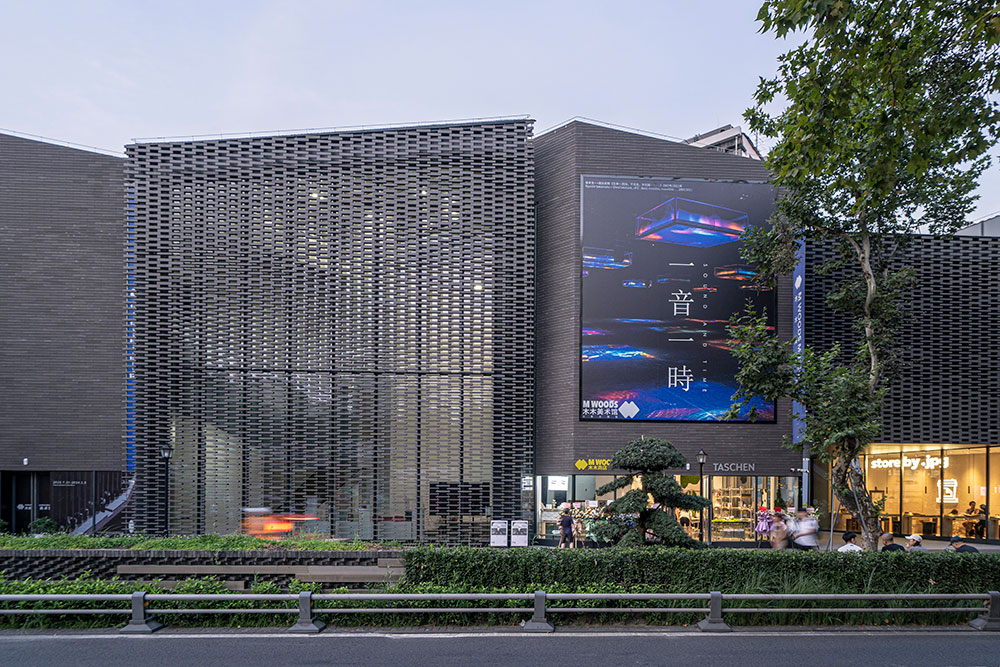
In 2023, a new M WOODS Museum opened in the center of Chengdu, the capital of Sichuan Province, China. The inaugural exhibition at M WOODS CHENGDU (People’s Park) is SOUND AND TIME, a collection of installations by SAKAMOTO Ryuichi (August 18, 2023–January 5, 2024).
M WOODS is an independent, not-for-profit art museum that completed its first museum in Beijing’s 798 Art Zone in 2014. In 2019, it opened the M WOODS Art Community in the old town of Beijing, where the SAKAMOTO Ryuichi exhibition seeing sound, hearing time was held inside the art area at M WOODS HUTONG (March 15–August 8, 2021). SAKAMOTO himself reviews the process that led to the realization of this exhibition in his autobiography, Boku wa ato nankai, mangetsu wo miru daro (How Many More Times Will I Watch the Full Moon Rise?) (Shinchosha, 2023), while testimony from M WOODS can be found in an interview with museum officials by the comparative philosophy scholar LIU Zheng.1
Based on the relationship of trust that SAKAMOTO had built through the Beijing exhibition, his second exhibition had been in preparation even before his death and became not just a repetition of the Beijing exhibition but a new reconstruction that incorporated the local flavor of Chengdu, as M WOODS co-founder LEI Wanying and M WOODS CHENGDU Deputy director / Exhibition director DENG Yingying stated in the interview above.
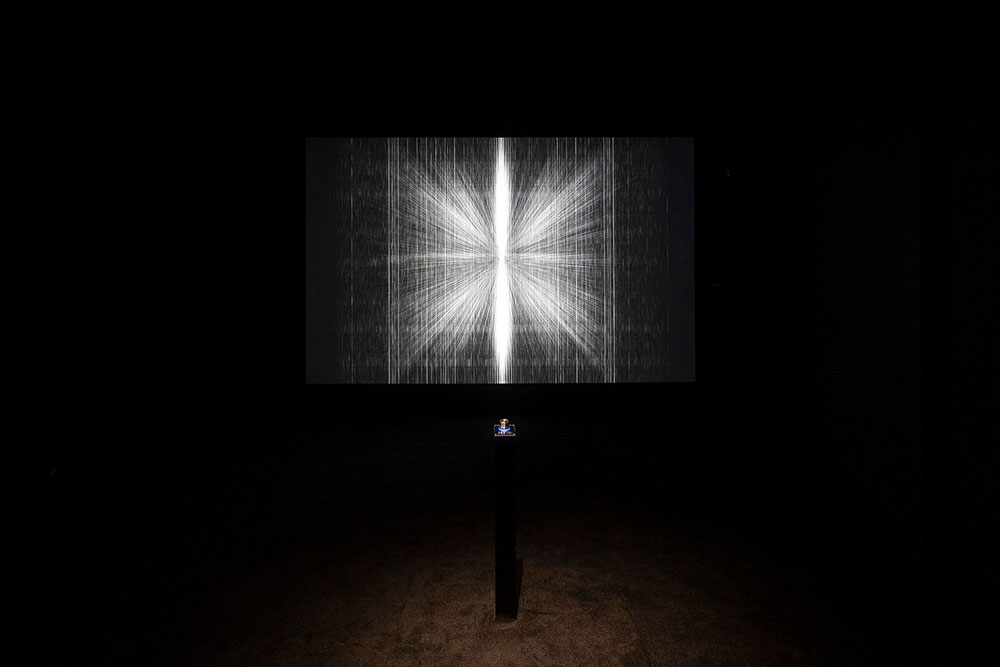
Sensing Streams 2023–invisible, inaudible (collaboration with MANABE Daito, 2023) in the first room is the Chengdu version of the original,2 first released as a special exhibition at the Sapporo International Art Festival 2014. It collects local electromagnetic waves and converts them into video and audio, raising awareness that urban life cannot be sustained without these invisible and inaudible waves. Although it is interactive, with the conversion mode changing as you press a button and the frequency changing when you turn the dial left and right, this adversely makes us realize how little power such will and manipulation by a human can have. This work brings to light a world of sound and noise that precedes the human activity of constructing a musical order.
Human life can only be sustained by the support of the non-human. However, no matter how aware one is of humankind’s limitations, humans can only survive by bringing the world beyond those limitations closer to their world to some extent. SAKAMOTO Ryuichi published a message, “SN/M ratio: 50%,” in releasing his second to last album, async (2017). According to a posthumous interview with FUKUOKA Shin-Ichi, SAKAMOTO initially collected “sounds from the natural world” and sounds “produced by rubbing or hitting things that are not musical instruments,” that is, S (sound) and N (noise), but eventually “realized that M (i.e. music) was lacking” (SAKAMOTO Ryuichi + FUKUOKA Shin-Ichi, Ongaku to seimei [Music and Life], Shueisha, 2023). The second exhibit of SOUND AND TIME is a by-product of the thus-formed async, a collaborative work with TAKATANI Shiro, async–drowning (2017).
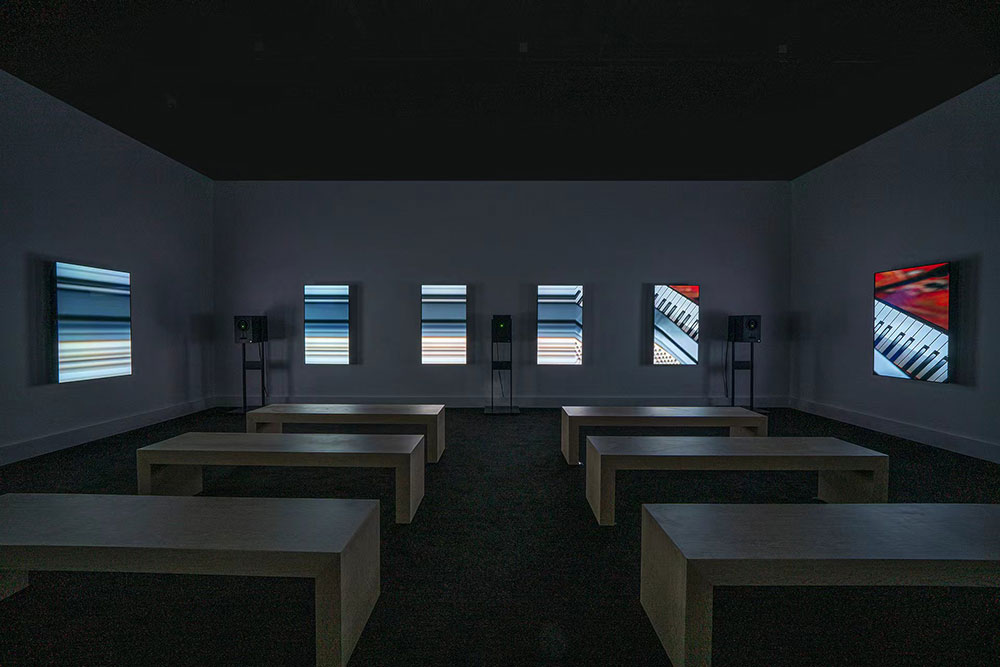
In this work, while async is played from six speakers (forming a 5.1ch) placed on all four sides of the room, a series of images by TAKATANI are randomly projected onto eight screens without synchronizing to the music. The clear shapes of objects such as SAKAMOTO’s piano, his books, and the flowers on the balcony of his New York home studio eventually lose their outlines as they are scanned, starting from the right or left edge, dissolving into a bundle of scanning lines before giving way to other images. What is interesting here is that TAKATANI seems to be retracing backward the operation of transitioning from the inhuman to the human that SAKAMOTO performed while producing his album.
While async is played in the best possible environment, as an attempt at a kind of compromise (which here, this word should be comprehended as one of the most sincere human activities) of exposing oneself to a domain outside of the human, while determining the degree to humanize it, async–drowning invites visitors to a deep state of immersion, making them realize that the compromise can never resolve the tension with the inhuman.
I can say that the unresolvable tension permeates the entire exhibition of SOUND AND TIME.
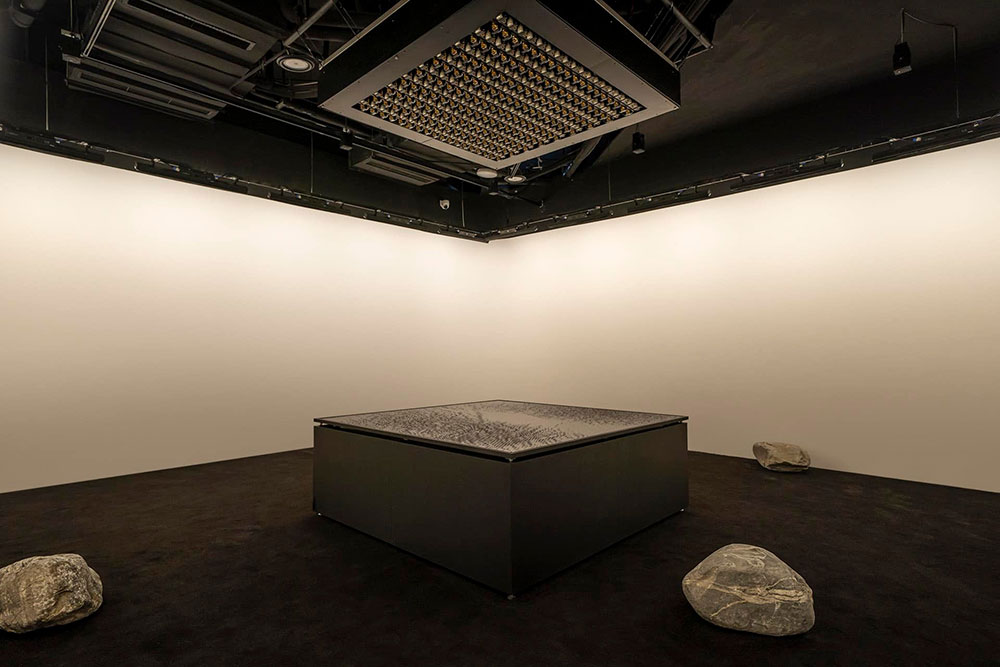
Placed in a small room next to LIFE–fluid, invisible, inaudible… (collaboration with TAKATANI Shiro, 2007/2023), one of SAKAMOTO’s representative installations and a central feature in this exhibition, water state 1 (collaboration with TAKATANI Shiro, 2013) is an installation of water ripples based on data on annual precipitation in East Asia, including China, and features stones selected by TAKATANI from the mountains of Ya’an, a city neighboring Chengdu. The tranquil garden-like presentation leaves a deep impression of the power of the untamed natural environment. The two works related to async are exhibited around this large-scale installation: async–volume (collaboration with Zakkubalan, 2017), which brings to light SAKAMOTO’s daily life during the production of the album through a series of footage in which he is not present, and async–first light (collaboration with APICHATPONG Weerasethakul, 2017), which floats on the border between dream and awakening. Either is a unique attempt to give shape to the ambiguous expanse outside of human willful activity.
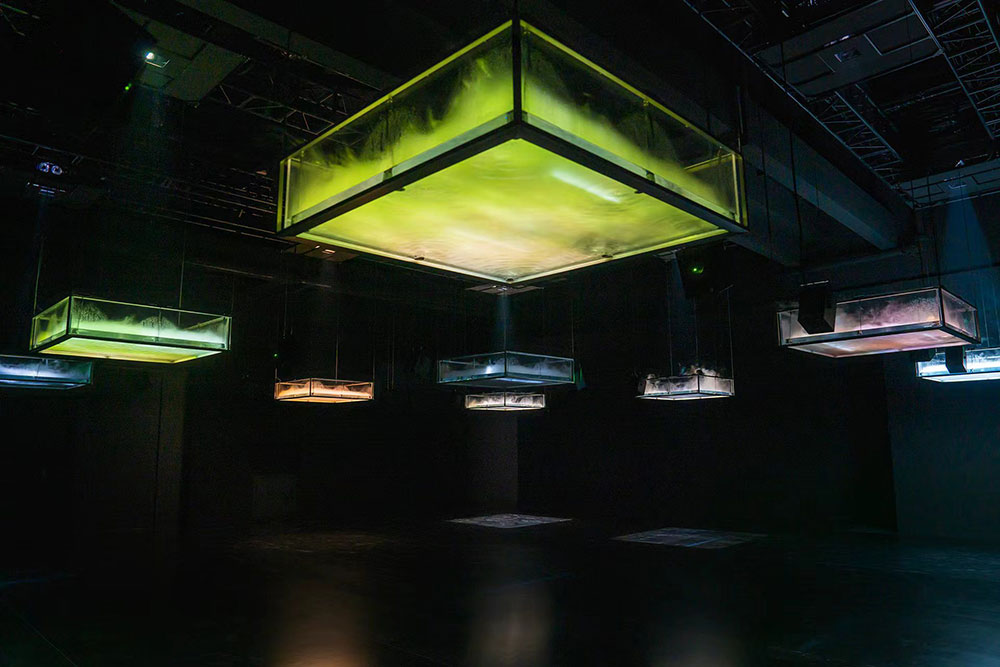
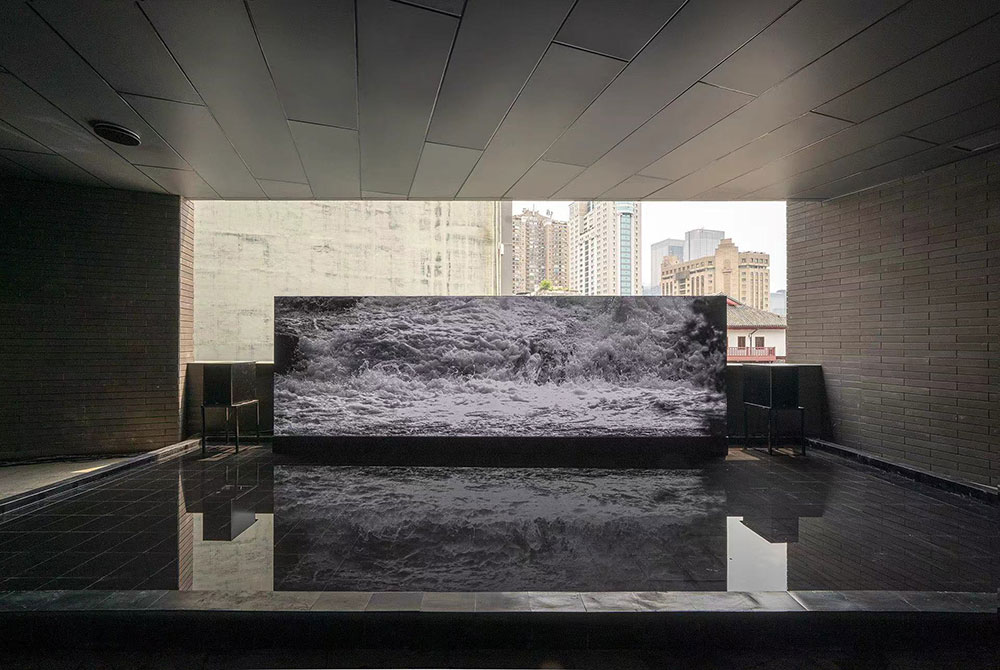
The exploration of the relationship between human will and what cannot be controlled by will is linked to the question of time. The aforementioned collaboration with TAKATANI Shiro in LIFE–fluid, invisible, inaudible… dismantles the sequential development of the 1999 opera LIFE, combining fragments of music and images that appear and disappear in water tanks suspended in the air. In 2021, SAKAMOTO collaborated with TAKATANI again on a stage production, TIME, which was originally performed at the Holland Festival in the Netherlands and is scheduled to be performed in Japan for the first time in March–April 2024. At the SOUND AND TIME exhibition, we can see the beautiful work TIME–déluge (collaboration with TAKATANI Shiro, 2023) based on the musical theater production. In the semi-outdoor exhibition space, a large screen is placed on a calm water basin against the backdrop of the buildings of the city of Chengdu. A flood that cruelly washes away all human activities is shown in slow motion on a high-speed camera to the sound of the flute played by FUJITA Rokurobyoue, the 11th head of the Fujita school of flute playing, who passed away in the fall of 2018.3 I visited the exhibition twice, once in the afternoon and once at night, and although the impression given by the semi-open-air exhibit differed between day and night, it portrayed and played the unchanging fate of the failure of the human will.
In Boku wa ato nankai, mangetsu wo miru daro (How Many More Times Will I Watch the Full Moon Rise?), SAKAMOTO reflects on the musical theater production that inspired this installation, saying, “I chose the title TIME and dared take on the challenge to negate time.” What is being considered here is time imprinted with human will and time that leads humans to achieve a certain goal after a series of successive developments. Time, in this sense, is an essential condition for music as an “art of time.” From his earliest days, SAKAMOTO has consistently been aware of the “illusory” character of such time and has tried to resist it.
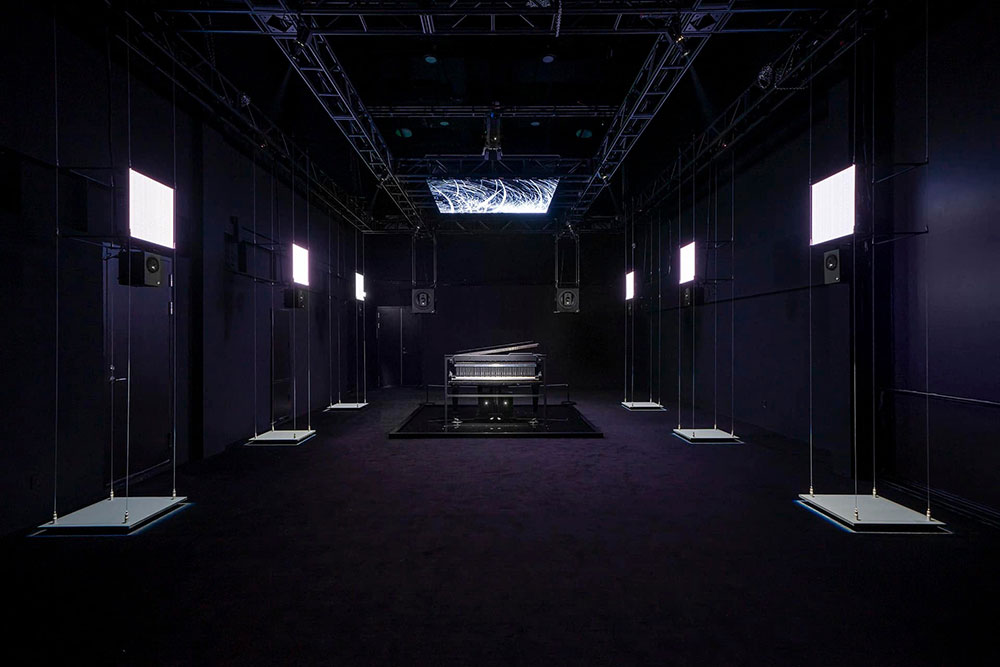
However, no matter how keen his ears were for SN, which preceded M, SAKAMOTO never accepted the complete absence of M or the complete negation of the human. In the same way, he was not trying to dismantle all of human time. The final piece in the exhibition, IS YOUR TIME (2017/2023), is a piano submerged in seawater during the tsunami caused by the Great East Japan Earthquake, which he interpreted as “attuned by nature,” playing melodies based on data from earthquakes around the world. Like TIME–déluge, it certainly takes as its subject the disintegration of human activities caused by flooding. However, this work is also an attempt to bring the piano, which once became an “object,” back to its role as an instrument, even if it is not in its complete state. As the title suggests, this work acknowledges “your time,” the time of each individual living in their unique circumstances, and gently nudges viewers and listeners to survive through time despite all difficulties. In fact, according to the testimony of DENG Yingying, Deputy director of M WOODS CHENGDU, in the interview mentioned at the beginning of this article, this work was chosen to close the exhibition “due to the consideration by SAKAMOTO, who knew that Chengdu had experienced an earthquake.”
“I love it so much that I don’t want anyone to listen to it,” said SAKAMOTO Ryuichi when async was released. The question of whether others, even those who call themselves his fans, can share what he puts into his work is nothing other than a persistent question that SAKAMOTO has asked since his early days and was frequently repeated in his dialogue with OMORI Shozo, Oto wo miru, toki wo kiku—Tetsugaku kogi (Seeing Sound, Hearing time: A Philosophical Lecture, Asahi Press, 1982, later Chikuma Gakugei Bunko, 2007), which became the basis for the title of the Beijing seeing sound, hearing time exhibition. However, this skepticism about mutual understanding seems to have led to SAKAMOTO’s enthusiasm in his later years to have his work properly accepted, resulting in a willingness to spare no effort to achieve this.
As reflected in Boku wa ato nankai, mangetsu wo miru daro (How Many More Times Will I Watch the Full Moon Rise?), SAKAMOTO planned the exhibition Installation Music (The Watari Museum of Contemporary Art, April–May 2017) with the desire to provide an “ideal space for listening” async, and after about six months, this endeavor was succeeded by Installation Music 2 (NTT InterCommunication Center [ICC], December 2017–March 2018). Without this revitalization of his installation works, the two retrospectives in China and the prior exhibition at piknic, an art space in Seoul, South Korea (Ryuichi Sakamoto Exhibition: LIFE, LIFE, May–October 2018), would never have happened. The hope that SAKAMOTO continued to maintain despite his deep skepticism and despair has brought about these developments. Following this series of retrospectives, an exhibition titled seeing sound, hearing time will be held in Japan at the Museum of Contemporary Art Tokyo from the end of 2024 (December 21, 2024–March 30, 2025).
notes
information
Ryuichi Sakamoto: SOUND AND TIME
Date: Friday, August 18, 2023–Friday, January 5, 2024
Venue: M WOODS (People’s Park), Chengdu
https://mwoods.org/Ryuichi-Sakamoto-SOUND-AND-TIME
*URL links were confirmed on April 22, 2024.