© Agency for Cultural Affairs.
FUWA Ryozo
Photo: ONO Hiroshi
This is a series of interviews with artists who have pioneered the expression of sounds in the world of media arts, including the fields of animation, tokusatsu (special effects), and video games. In this issue, we interviewed composer KAWAI Kenji, whose work spans a wide range of genres, from animated TV series and special effects to live-action international films, earning him high worldwide acclaim. In this first part, we delve into his early musical activities as a student, the path that led him to a career in composition, and his pioneering techniques in creating and recording uchikomi-style (programming for automatic performance) incidental music composition.
Index of Serials
—Today, we are at your private studio, AUBE STUDIO, in Shinagawa-ku, Tokyo. Are you originally from this area?
KAWAI Yes. Both of my parents were from here, and I also grew up in Shinagawa along the Tokaido road. When I first started my music career, I even recorded music in my room at my parents’ house, but it became difficult to continue because the equipment grew larger and noise became an issue. I found a soundproofed apartment nearby, so I moved my workspace there around 1990. Then, around 2000, I decided to build a fully equipped studio here. So, I’ve been in Shinagawa since I was born.
This is where I handle all my uchikomi (programming for automatic performance), as well as basic recording and mixing. I create demos here, send them to the director and production company, and if they approve, I write the score and record the final version in a large studio with an orchestra. That’s my typical recording process.
—Could you tell us about your childhood experiences with TV shows, movies, and music?
KAWAI As a child, I often watched animation series like Janguru taitei Reo (Jungle Emperor Leo) (1965), Obake no Q-taro (Q-taro the Ghost) (1965), Osomatsu-kun (Mr. Osomatsu) (1966), and Paman (Perman) (1967). It was a time when both black-and-white and color animations coexisted, but all of my memories of these shows are in black-and-white because our TV was black-and-white. I also remember going to see Maho-tsukai Sari (Sally the Witch) (1966) at a nearby movie theater. Kita-Shinagawa had a few movie theaters back then, but I didn’t watch many live-action movies as a child.
As for music, my father owned a stereo system and often played classical records. Although I didn’t actively listen to it myself, I liked music with clear melodies, like Peer Gynt by Grieg. I also enjoyed playing animation Sonosheets (flexible vinyl records) that I was given. My father also owned a Sony tape recorder, and I often listened to movie soundtracks he recorded from the radio, such as Moulin Rouge (1952) and Lawrence of Arabia (1962). The music from Moulin Rouge feels like the starting point of my musical journey. When I was in the first grade, I wasn’t very strong and often spent time resting in bed. To pass the time, I played with the tape recorder every day. This was before cassette tapes, so I played small reel-to-reel tapes. Later, the Group Sounds and folk song movement emerged when I was in the third grade. MORIYAMA Ryoko’s Satokibi batake (Sugarcane Field) (1969) was my favorite.
In middle school, I became obsessed with Burt BACHARACH.1 I saw his concert in Japan with a full orchestra on TV, and I was instantly hooked! It was incredible. I listened to the Carpenters because I heard they sing BACHARACH’s songs, and from there, I discovered Carole KING, who wrote songs for the Carpenters. Those three were all I listened to in middle school, even though the world around me was all about the Beatles at that time (laughs).
—It is surprising that you, as a guitarist, didn’t start with the Beatles or Group Sounds, but were drawn to soft pop music like BACHARACH and the Carpenters.
KAWAI I feel the same way. Most of my friends were crazy about the Beatles, and when I mentioned BACHARACH, they’d say, “Who is that?” (laughs). Anyway, I gradually got into rock music from Carole KING. That was my life in middle school.
—When did you first become interested in playing an instrument?
KAWAI|We had my brother’s classical guitar at home, and I started playing it casually when I was in third or fourth grade. In middle school, I got a 12-string guitar and played songs by artists like Toi Et Moi. I started playing the electric guitar in high school. While listening intently to Carole KING, I realized that one of the session musicians, Danny “Kootch” KORTCHMAR, was a great guitarist. Another major influence is SANTANA. I also watched his concert in Japan on TV and thought, “I want to be like SANTANA!” (laughs). I became obsessed with copying his music. Ultimately, it was Danny KORTCHMAR and SANTANA who influenced my choice of playing electric guitar. My first opportunity to perform in front of audiences was at my high school festival, where my friends and I covered Chicago’s songs. In high school, I also played covers of Japanese artists such as Happy End, Caramel Mama, and YAMASHITA Tatsuro.
—It seems natural that you would get into YMO (Yellow Magic Orchestra) in that context.
KAWAI Surprisingly, I didn’t at all. My decision to start programming music, known as uchikomi, wasn’t influenced by YMO or techno-pop trends. It was simply out of necessity to create music on my own.
—When did you start pursuing a career in music?
KAWAI I never dreamed of making a living from music until I was in high school. My high school was technology-oriented and I applied to science-related colleges. I ended up in the nuclear engineering department after failing the entrance exam in my first year. However, the college was far from where I lived, so I started skipping classes and eventually got expelled. Then I decided to go to a music school so that I could at least work for something I loved. I wanted to become a studio musician at that time, but to succeed in that field, you need the ability to perform on the spot right after receiving a score. I thought that was not for me. I hated practicing (laughs).
Around that time, there was a band competition called the MAZDA College Sound Festival, organized by Mazda and Nippon Broadcasting System, which later featured SEIKIMA II and Super Slump, the predecessor of Bakufu Slump. In its first year, my fusion band, MUSE, entered the competition on a whim, and somehow won first place (laughs). Since the competition was sponsored by Nippon Broadcasting System, we recorded a demo tape at the prestigious Hitokuchizaka Studio of Canyon Records and started working on our professional debut. Although we didn’t make it, companies that heard the demo began offering us jobs such as composing music for TV commercials and corporate promotional videos. That was the beginning of my career as a professional composer. In fact, I started uchikomi music out of necessity to create music for those commercials on my own.
In the early 80s, home music production, called takuroku (home recording), became popular, and audio manufacturers rolled out audio equipment for this trend. I originally used a TEAC multitrack cassette tape recorder, but soon became dissatisfied and bought a TASCAM 33-8, an 8-channel reel-to-reel multitrack recorder (MTR). It cost about 600,000 yen at the time. It was a fairly big leap for me to make that purchase. I borrowed money from my father, but I have already paid him back (laughs). It definitely expanded my capabilities in commercial music production.
—Let’s go back to your band MUSE. So it didn’t make a professional debut?
KAWAI We didn’t debut as the band, but the demo tape we recorded led to other opportunities. We did play as the backing band for singer-songwriter FUKANO Yoshikazu for a time. Then we made a connection with voice actor MITSUYA Yuji, as Mr. FUKANO wrote songs for him, and we also played as his backing band. Back then, I wasn’t too busy with music production for commercials, so I was very grateful for any music-related offers, including backing band gigs. For example, YAZAWA Toru, Alice’s famous drummer, often hung out at my house, and I arranged his songs and made demos together with the 8-channel MTR. Over time, I started receiving more offers to compose music, and the music I wanted to make became different from the sound I could make with the band. I wanted to explore music with strings like BACHARACH, and I began to feel the limits of band music.
—From that time on, your career as a professional composer and incidental music composer gradually took shape.
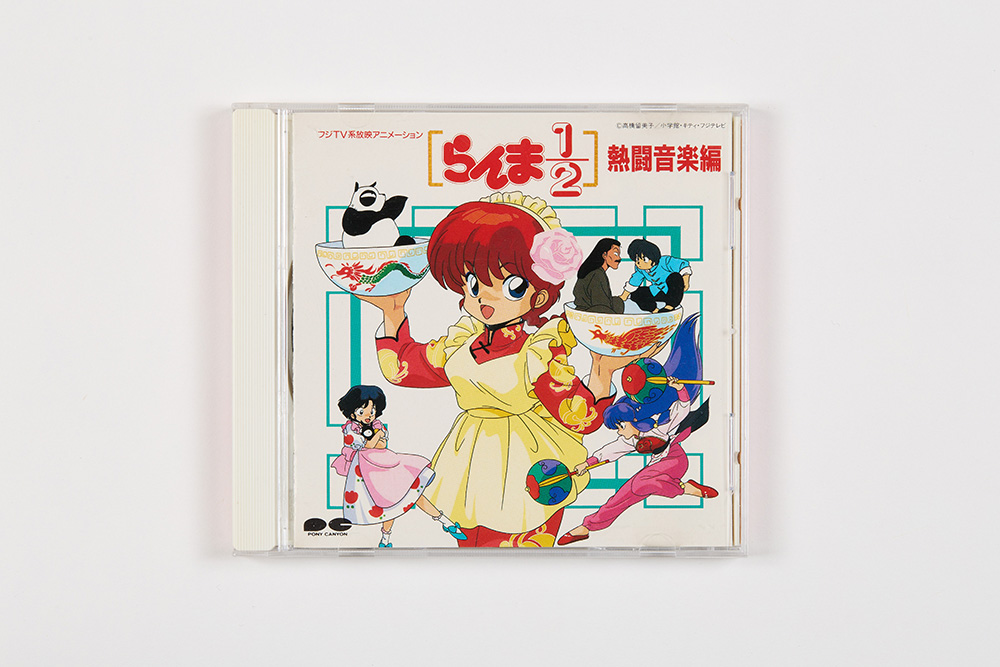
KAWAI It all came from connections with people. When I worked on music for Maza (Mother), a pop opera by MITSUYA Yuji, I met the sound director ASARI Naoko. She introduced me to the president of her company, SHIBA Shigeharu, the founder of Omnibus Promotion, a sound production company. Through Mr. SHIBA, I began composing music for projects like the final episode of Urusei yatsura (Obnoxious People) (1986), short animated movies, and promotional videos for Tokuma Shoten. This led to opportunities like Mezon Ikkoku (Maison Ikkoku) (1986) and Ramma 1/2 (Ranma 1/2) (1989). It was a small but significant step forward. Mr. SHIBA also introduced me to director OSHII Mamoru, saying, “There is someone I want you to meet.” They asked me to compose music for a promotional film for voice actor CHIBA Shigeru, to be directed by Mr. OSHII and produced by Mr. SHIBA.
—This was your first collaboration with director OSHII Mamoru, who became your longtime partner, starting with the movie Akai megane (The Red Spectacles) (1987).
KAWAI That’s right, but I don’t think I was chosen for my music or talent. The movie was a semi-independent production with an extremely limited budget, so they needed someone who was able to create uchikomi music at low cost without hiring a band or using a studio (laughs).
Looking back on the subsequent series of collaborations with director OSHII, I’m very glad that I invested in the 8-channel MTR (laughs). It was indispensable for Akai megane, although I think I soon upgraded to the TASCAM 55-8, around that time. OTSUKI Toshimichi from King Records heard the music I made for the movie trailer, and said, “This music is so cool, we’d like to release a record.” So, I ended up recording a higher-grade version at King Records’ prestigious studio. This connection with Mr. OTSUKI led to projects like Seirei no sasayaki (Spirit Whispers) (1987) and the OVA (original video animation) Debiruman tanjo-hen (Devilman: The Birth) (1987). These once-in-a-lifetime encounters have truly shaped my musical journey.
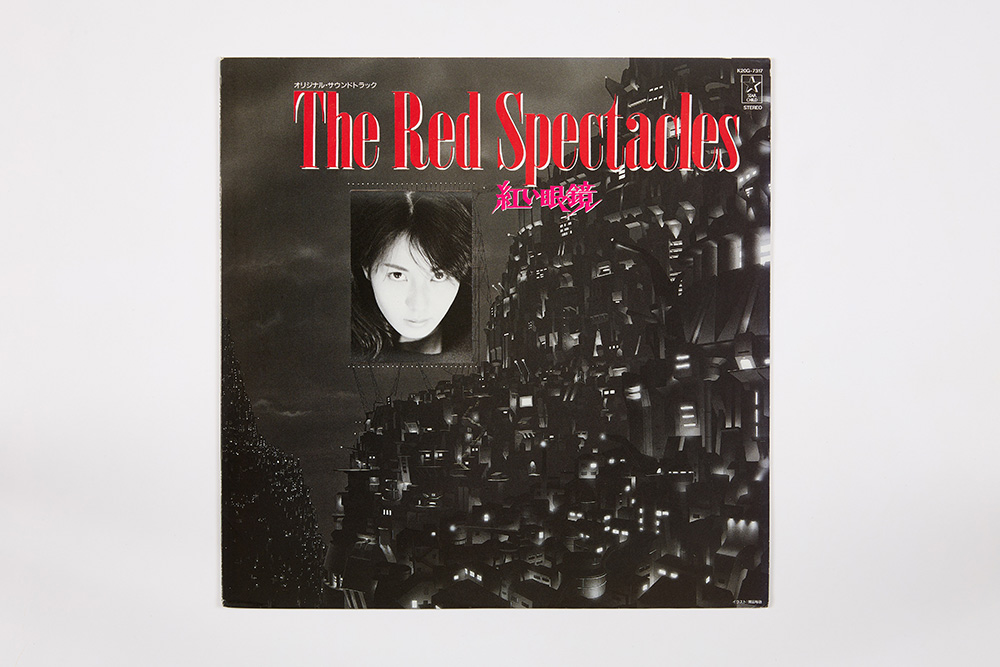
—In your early career, you worked simultaneously on music for comedies such as Mezon Ikkoku (Maison Ikkoku) and Ramma 1/2 (Ranma 1/2) and serious dramas such as Akai megane (The Red Spectacles) and Seirei no sasayaki (Spirit Whispers). Did this experience influence your later style and versatility?
KAWAI Since I didn’t receive a formal musical education, I didn’t know how to write orchestral music, proper harmonies, or counterpoint. Every aspect of composition was a new challenge for me from the very beginning. Both comical and serious pieces were part of this trial-and-error process. The music I make today is the result of these accumulated efforts. I totally rely on my intuition, repeatedly asking myself, “Is this okay?” or “Am I doing this right?” as I experiment. However, I always had an ideal sound in mind—something akin to BACHARACH’s music—and the vague image of the sound I wanted to create served as my guide. Many composers, especially those working on incidental music, went to music schools and can write scores directly. But for someone like me, composing requires trying out notes, listening to them over and over again, and correcting them along the way. That’s why the uchikomi-style music production, which I incidentally found, is perfect for me. I can gradually add depth and refinement to my music step by step, through trial and error.
—Composer KOSAKI Satoru, who we featured in this series in 2021, mentioned that his composition process also heavily relies on uchikomi and involves refining experimental notes over time. I think you are a pioneer of this method in the field of incidental music composition.
KAWAI I never intended to be a pioneer (laughs). Another thing that suited me was my interest in working with synthesizers and recording equipment, even though I originally wanted to be a guitarist. I used to buy and read Sound & Recording Magazine every month, excited about the latest equipment releases. When I was just starting out, I saw all kinds of expensive equipment that I admired in recording studios I visited for work. I’d think, “I want this” or “I want that” (laughs).
—The time when you started your musical career perhaps coincided with the rapid advancements in music technology, with an abundance of instruments and equipment from various manufacturers—don’t you think?
KAWAI Absolutely. It was the transitional period from analog to digital, and from hardware sequencers (music programming equipment) to PC-based production with DAWs (Digital Audio Workstations). Until the early 1990s, Sony’s 24 track PCM-3324 digital multitrack recorder (released in 1984) and 48 track PCM-3348 (released in 1989) were widely used in recording worldwide. By the late 1990s, they were gradually taken over by the DAW, Pro Tools (first generation released in 1991), which became a global standard. Our studio used the PCM-3348 until recently, but we’ve switched entirely to a Pro Tools environment. We had two PCM-3348 units, but we ended up discarding them because no one wanted them. Many studios face the same issue. I guess it’s about time to move on. These devices were iconic in recording history, but the industry moves on mercilessly.
—Would you please name some particularly memorable works from your early career in the 1980s?
KAWAI Let me think… It’s perhaps the TV commercial for Karamucho potato chips from KOIKE-YA (laughs). It was their very first ad, made by just three people: someone from the music production company, an ad agency representative, and me. In the commercial, a grandmother eats Karamucho and exclaims “Hee!” while her eyes turn into Xs. That “Hee!” was actually the voice of the ad agency representative, and I used my Ensoniq Mirage sampling keyboard to synchronize it with the animation (laughs). I have also created jingles and sound logos for products like Baby Star Ramen and Atom House Paint.
—Among these “hidden works,” one standout is the theme for Chukyo TV’s Owarai manga dojo (Comedy Manga Dojo) (1976–1994).
KAWAI I think it was a little later, a new theme in the 1990s. Someone at Chukyo TV was a big fan of Akai megane (The Red Spectacles), which led to my first job with them: Music for a 15-minute program called Tabi wa panorama (Panoramic Journey) (1985–2007), sponsored by the Meitetsu Group. This connection brought me to work on variety shows such as Owarai manga dojo (Comedy Manga Dojo) and Honjamaka kyowakoku (Honjamaka Republic) (1993–1995), as well as music for TV dramas. I also composed the theme music for Fuji Television’s Utchan Nanchan no yarunara yaraneba! (Utchan Nanchan presents “You Must Do It, If You Want to Do It!”) (1990–1993). I’ve recently completed archiving my work from that period, and that’s why the multitrack recorder has finally retired.
—At what point did you feel that you had established yourself as a composer of incidental music?
KAWAI Perhaps when I was working on Kido-keisatsu Patoreiba (The Mobile Police Patlabor) (OVA) (1988), Kido-keisatsu Patoreiba: The Movie (Patlabor: The Movie) (1989), and Ramma 1/2 (Ranma 1/2). I remember dedicating an entire summer, probably in 1989, to working on both Patlabor and Ranma. During the final stretch of The Movie, I think I only had a couple of hours of sleep a day (laughs). For the Patlabor OVA and movie, I composed music to carefully match the completed animation. Back then, there were no advanced systems to synchronize video and sound, so it required manual adjustment to synchronize a videocassette recorder (VCR) with a sequencer. The VCR had a slight delay in starting the video after pressing the Play button, so the button had to be pressed a little earlier to compensate for the lag. Some staff members were very good at this, but even then, it was always a few frames off (laughs).
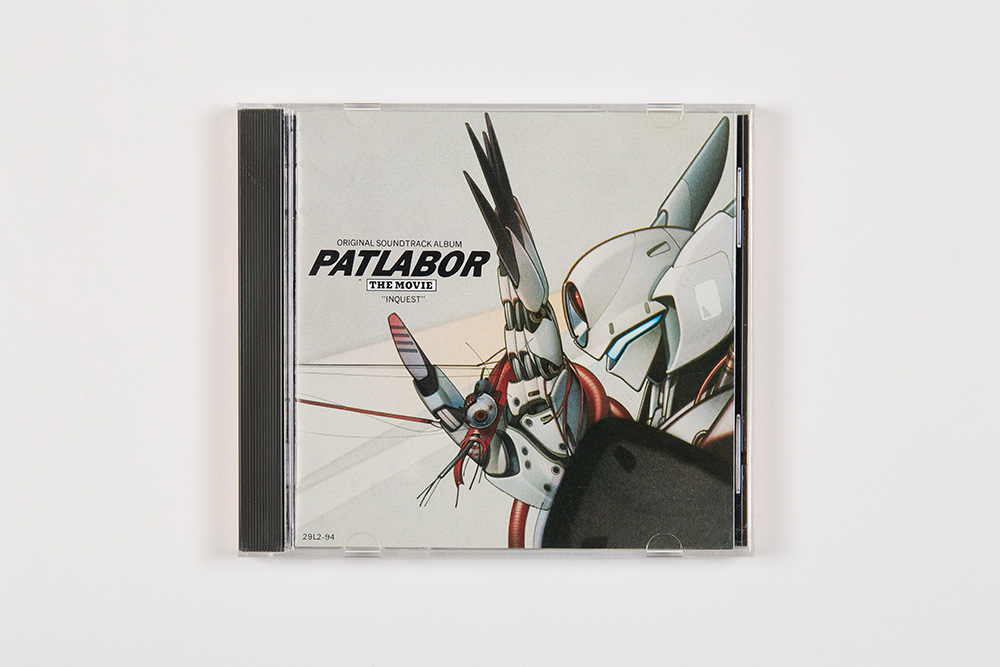
—The Patlabor series is still in production. Does this series have special significance for you?
KAWAI Exactly. Working on Patlabor, especially collaborating with director OSHII, probably changed my music. Mr. OSHII’s ideas are abstract and often difficult to grasp, so the two of us spend a lot of time communicating to find the right solutions. We established this style of collaboration while working on the OVA of Towairaito Q meikyu bukken FILE538 (Twilight Q: Mystery Article File 538) (1987). When I made kind of an unusual metallic sound with a YAMAHA DX-7 synthesizer, Mr. OSHII was really pleased, saying, “This will do!” That moment felt like we both agreed, “This was the answer…”
Since we both liked that sound texture, we used something similar in the Kido-keisatsu Patoreiba: The Movie (Patlabor: The Movie), in the very first scene (where HOBA Eiichi throws himself into the air). For this scene, we recorded at Yamaha studio and used a steel drum we found in a warehouse to express this “mysterious metallic sound.” These kinds of interactions and trial-and-error sessions with Mr. OSHII have nourished me, I believe. Mr. OSHII is undoubtedly demanding, but I think what makes him feel satisfied and what resonates with me are quite similar. When we get the right piece, everything suddenly aligns and synchronization between visuals and music becomes more precise.
I believe that all composers of incidental music try to understand the director’s mind while working on their compositions. However, with Mr. OSHII, we don’t need to exchange ideas frequently since we have known each other for so long. I already have a clear sense of the “strike zone” to aim for. On top of that, Mr. OSHII has an unexpectedly wide strike zone (laughs). For example, even if I throw a pitch that’s quite close to the edge, he would say, “This would work in its own way,” as long as it falls in the strike zone. If I could “see a strike zone” for directors other than Mr. OSHII, composing music would be much easier. Unfortunately, there are directors whose strike zones I just can’t figure out (laughs). Conversely, this probably means that it’s easy for me to pitch to Mr. OSHII because he has a very “clear” strike zone of his own.
—Along with the Patlabor series, you also composed for other works with a distinct OSHII Mamoru flavor, including the OVA of Gosenzo-sama banbanzai! (Long Life to the Ancestors!) (1989) and the movie Keruberosu jigoku no banken (Stray Dog: Kerberos Panzer Cops) (1991).
KAWAI I really enjoyed working on Gosenzo-sama banbanzai! (Long Life to the Ancestors!). The animation itself was funny, and I always focused on how to make the audience laugh through the music. By that time, my communication with Mr. OSHII had become more relaxed, and there was almost no gap between the music I created and what he envisioned.
For most of the music in Kerberos, I made a significant shift in the sound direction to focus on acoustic guitars, following a suggestion from the sound director ASARI Naoko. She brought the Color Rit album (1989) by Lee RITENOUR and suggested we aim for a similar sound. I played all the guitar parts myself. I don’t think I’ve ever played guitar that much, either before or since. The music was pretty minimalistic, repeating similar phrases over and over, so I got sleepy while playing (laughs).
Then came Kido-keisatsu Patoreiba 2: The Movie (Patlabor 2: The Movie) (1993). For this project, I had already created a “pre-soundtrack,” a demo version that was also released as an album. This allowed us to establish the direction early on. Unlike the hectic schedule of the previous The Movie, its schedule was much more relaxed.
note
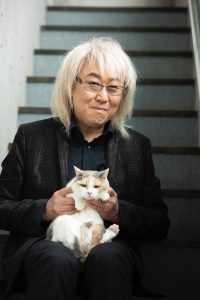
KAWAI Kenji
Composer and arranger. Born in Tokyo. Major works include Kido-keisatsu Patoreiba (The Mobile Police Patlabor) (1988, 1989), GHOST IN THE SHELL (1995), Ringu (Ring) (1998), Kasoken no onna (The Woman of S.R.I.) (2001–), Seven Swords (2005), Kidosenshi Gandamu 00 (Mobile Suit Gundam 00) (2007–2008), Ip Man (2008–2019), NHK Special Futto toshi (Boiling City) (2008–2009), BS World Documentary Yomigaeru dainiji sekai taisen: kara-ka sareta shirokuro firumu (Reviving World War II: Black and White Film in Color) (French documentary, 2009), NHK Special Mikaiketsu jiken (Unsolved Crimes) (2011–2020), Hanamoyu (Ardent Flower) (2015), Urutoraman Jido (Ultraman Geed) (2017), Kamen raida Birudo (Kamen Rider Build) (2017), NHK Special Jintai shimpi no kyodai nettowaku (The Body: Miracles of our Inner Social Networks) (2017), Mampuku (2018), Kitaro tanjo gegege no nazo (The Birth of Kitaro: The Mystery of GeGeGe) (2023), and more.
http://www.kenjikawai.com/ (in Japanese)
*Interview date: September 25, 2024
*URL link was confirmed on December 10, 2024.