© Agency for Cultural Affairs.
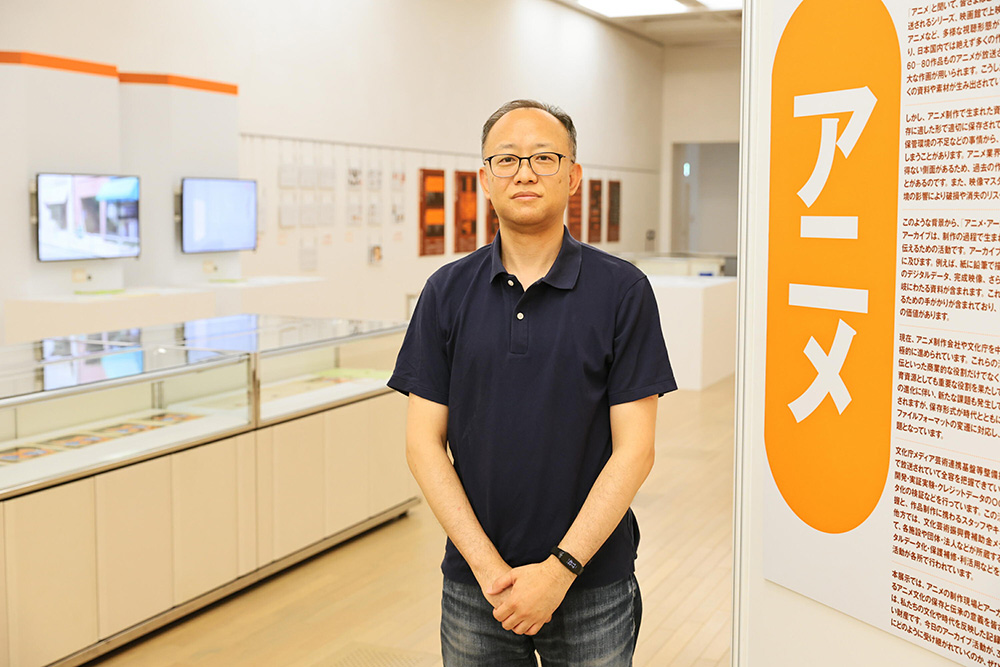
TANIGUCHI Ryuichi
Photo: ONO Hiroshi
As the global interest in manga, anime, and video games continues to grow, archiving efforts that strive to collect and preserve items related to each medium for future generations are gaining momentum. From June 14 to 22, 2025, the exhibition, Preserving! Utilizing!! Manga, Anime, Games in Tokyo 2025, was held at the National Art Center, Tokyo. It displayed manga magazines and manuscripts, animation cels, and functioning arcade machines, demonstrating both how these media arts were created and the importance of archiving them.
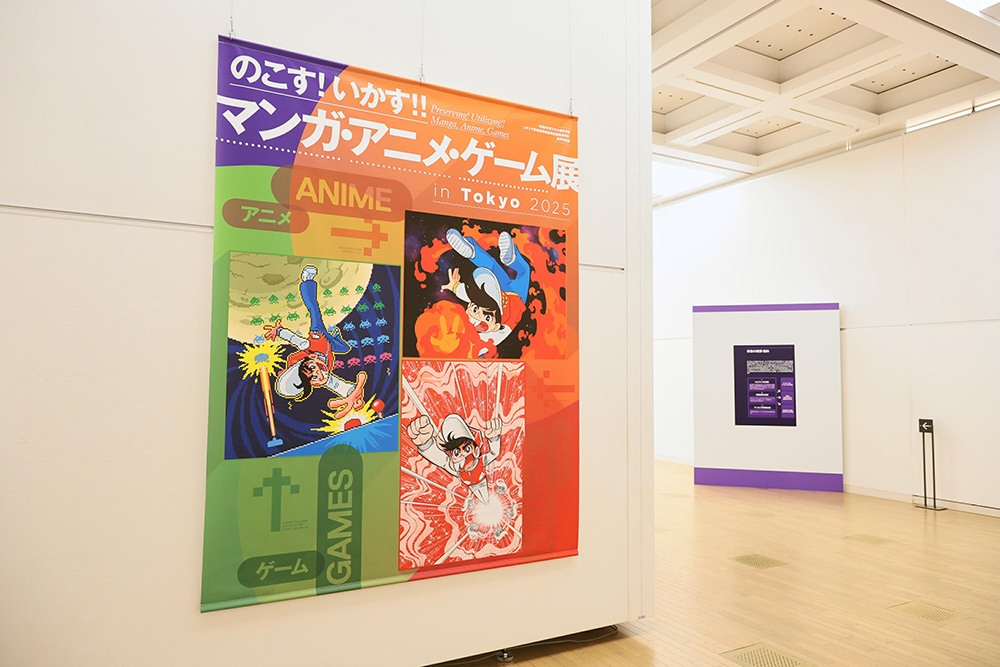
The Preserving! Utilizing!! Manga, Anime, Games exhibition was originally held as a way to showcase the various archiving efforts in Japan that came about as a result of research by the Agency for Cultural Affairs’ Media Arts Collaboration Infrastructure Improvement Project, which aims to support networks of groups devoted to archiving media arts, such as manga, anime, and video games. It was originally held at the Kyoto International Manga Museum from November 23, 2024, to March 31, 2025, and was followed by an “in Tokyo 2025” edition in June of that year. The larger space in Tokyo allowed for more exhibits and provided a deeper understanding of the archiving work going on in each field.
Attendees were likely taken aback by the nostalgic atmosphere right upon seeing the information poster at the venue’s entrance. This was largely thanks to the appearance of ISHINO Arashi, the main character of the manga Game Center Arashi (1979-1983) by SUGAYA Mitsuru, in the key visual.
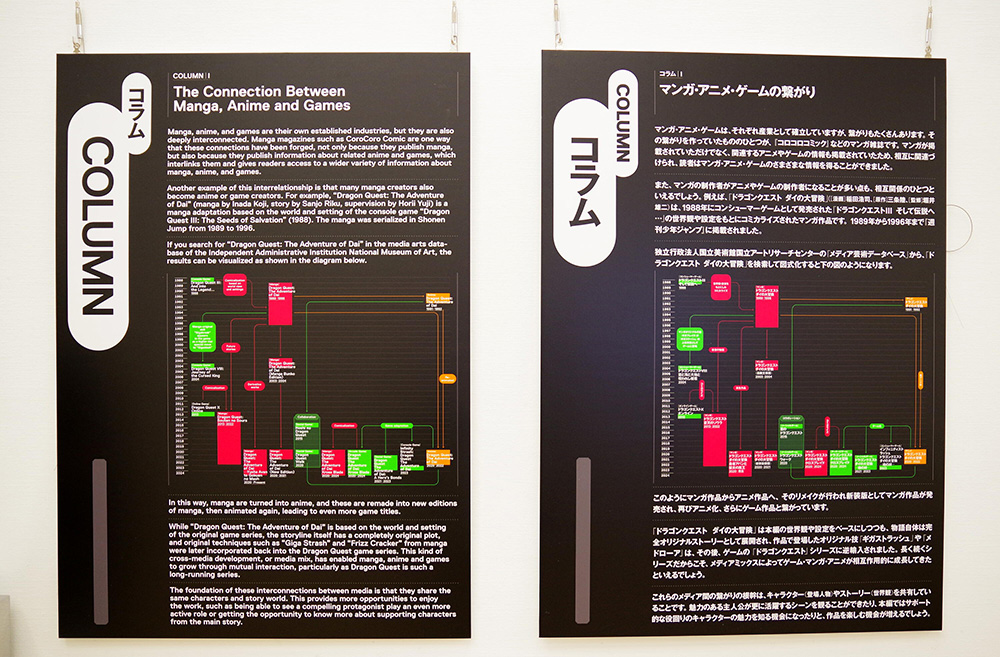
Upon entering the exhibition, information explaining the initiatives taken by the Agency for Cultural Affairs’ media arts project was on display. Along with this was a column explaining the connections between manga, animation, and games, using Dragon Quest: The Adventure of Dai as a prime example of the significance of having these three media exhibited together.
From there, the achievements of the project’s work in the fields of manga, anime, and games were exhibited. At the start of the manga section, shelves were set up, lined with the eye-catching covers featuring characters and idols from about a year’s worth of boys’ (“shonen” in Japanese) manga publications, such as Weekly Shonen Champion, Weekly Shonen Jump, Weekly Shonen Sunday, and Weekly Shonen Magazine.
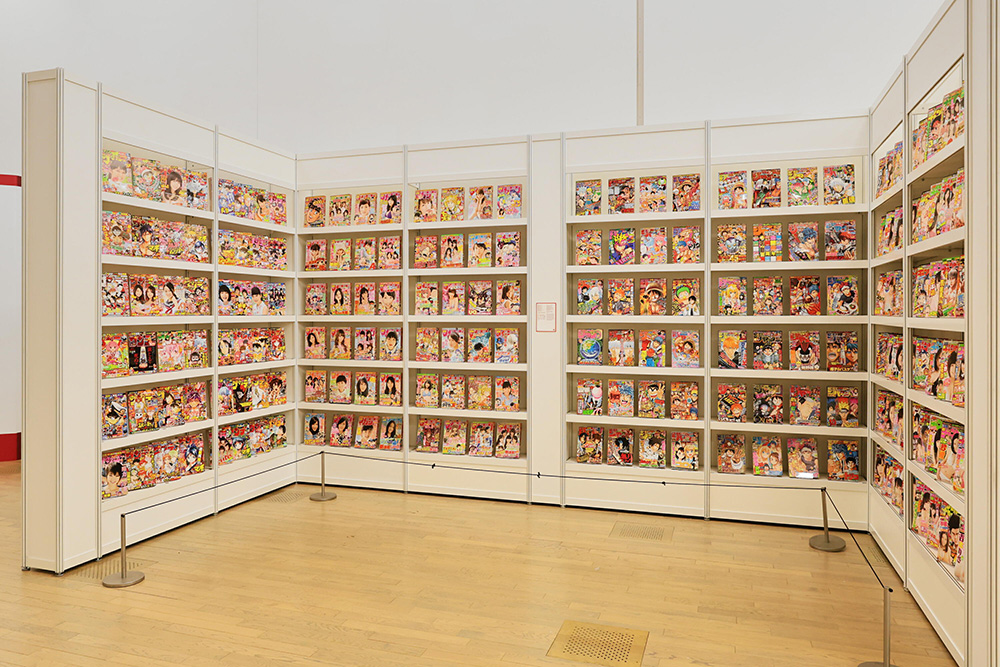
If one year’s worth of weekly boys’ manga magazines is enough to fill an entire wall, then just imagine how massive the total output of published manga magazines is when considering all the other magazines out there. And that’s not even taking into account all the content that’s been made until today. Just imagining such a display would be staggering. However, unlike books, manga magazines are usually read and thrown away, making them more difficult to collect the older they get. Through this collection by the Kyoto International Manga Museum, we could see that thorough preservation efforts are being carried out.
When it comes to manga, another important part of archiving is the storage of manuscripts, such as those held by the Yokote Masuda Manga Museum in Akita Prefecture. This exhibition featured original drawings for manga such as Henshu Oh (1993–1997) by TSUCHIDA Seiki. Also on display is a recreation of the final scene from CHIBA Tetsuya’s Ashita no Joe: Fighting for Tomorrow (1967–1973), created as a part of the Manga Shoso-in Project. You can even see the pen strokes and corrections, showing the importance of preserving original drawings and providing a rare glimpse of the creative process.
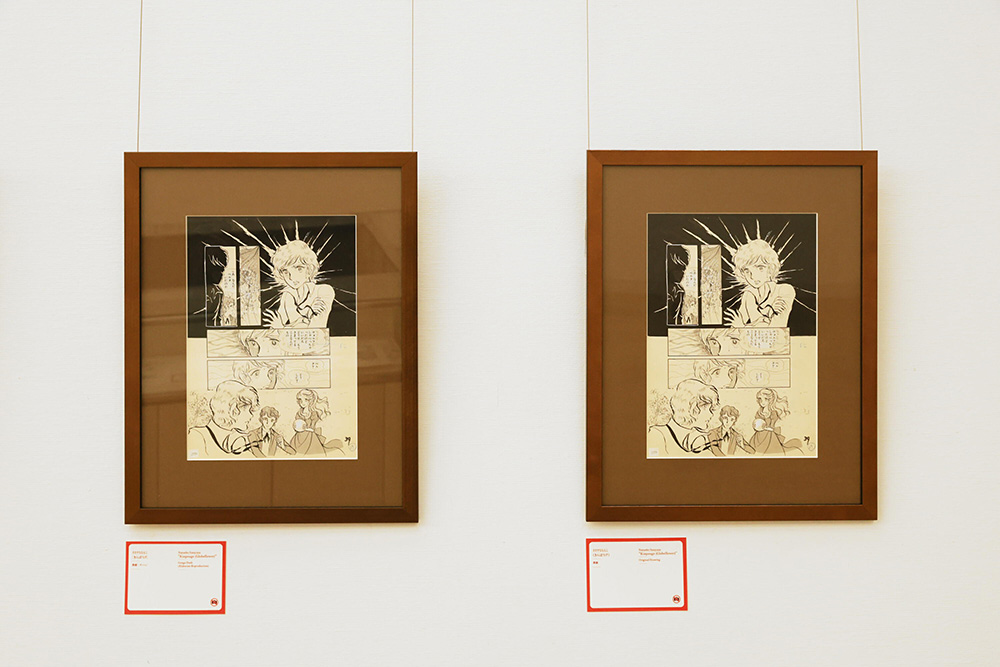
What’s unique about all this is that, considering the possibility that precious original works like these may deteriorate from being exhibited, efforts are underway to create accurate replicas that can be displayed in their place. The reproductions, called Genga’ (Dash), are so faithful to the originals that you can even sense the fading of the original manuscript and the raised texture of the phototypesetting. This means that even if an incident were to happen at exhibition venues, the original works wouldn’t be affected, and original manga drawings can be shown without worry.
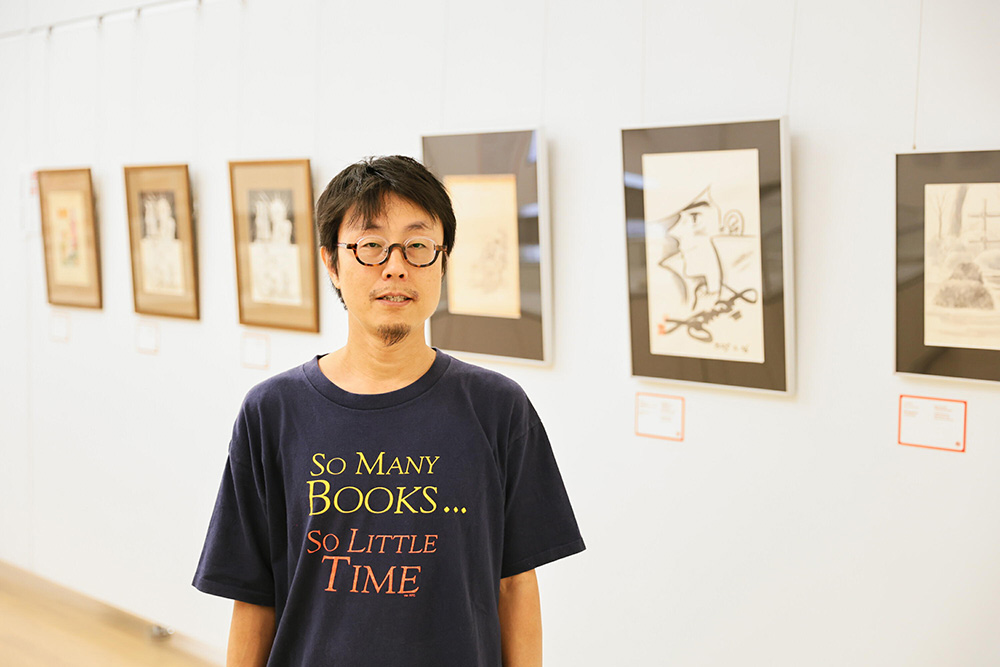
Besides published works and manuscripts, a lot more is involved in creating manga. The exhibition also showed landscape photographs taken by manga artists during overseas trips that became inspirations for later creations, as well as notebooks filled with sketches of various facial expressions. Also on display were items from the process of turning manuscripts into printed products, such as camera-ready copies and metal printing plates. The exhibition emphasizes the importance of the collection and preservation of these intermediate items of the manga production process into the digital age.
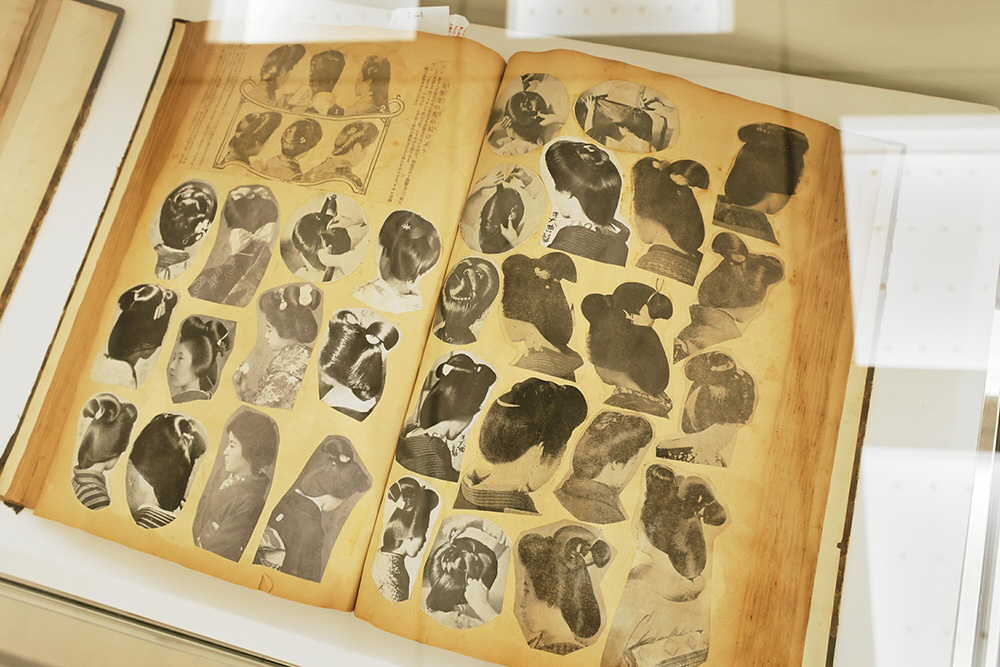
The animation section exhibited “intermediary materials” that were created during the production of anime, including storyboards, concept art, cels, original drawings, and videos. Signs explaining the process from planning and production to broadcasting or screening let visitors understand everything that went into bringing the animation they saw on TV or in theaters to life.
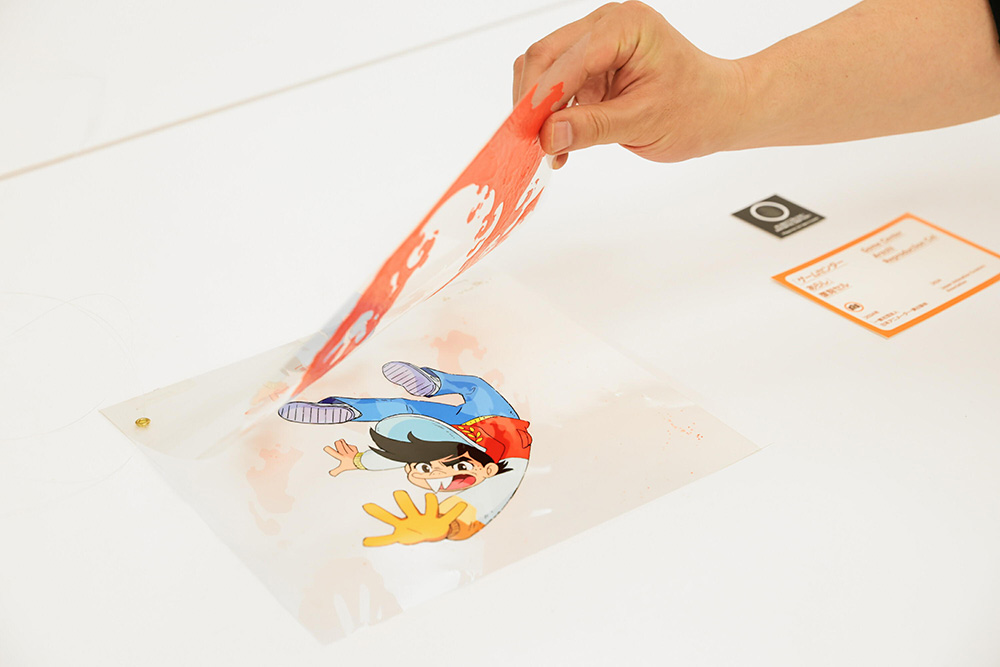
As expected, many people were drawn to the animation cels exhibited. A rare cel from the animated TV series Game Center Arashi that originally aired in 1982 and was used as a key visual for this exhibition brought back fond memories to those who watched it back then.
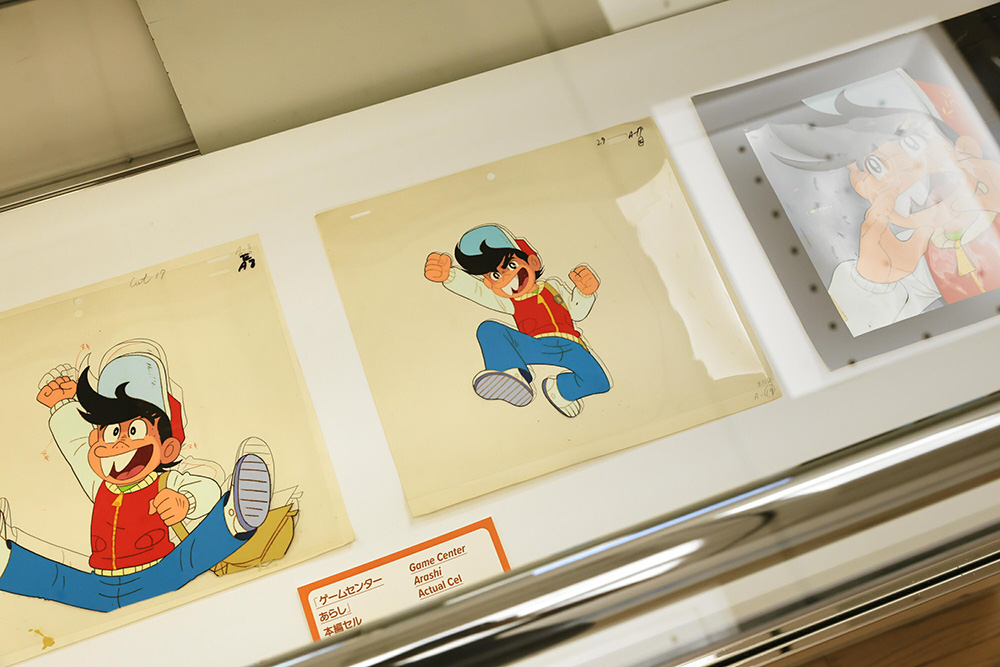
Now that animation has become increasingly digitized, cels are hardly ever used in commercial anime, so they must appear like peculiar artifacts to younger people. The exhibition also featured tracing machinery that can transfer lines from moving objects onto cels. And to educate visitors about how the cel era worked, there was an exhibit showing how a single image can be created by layering several cels on top of each other, using newly created cells just for this exhibition.
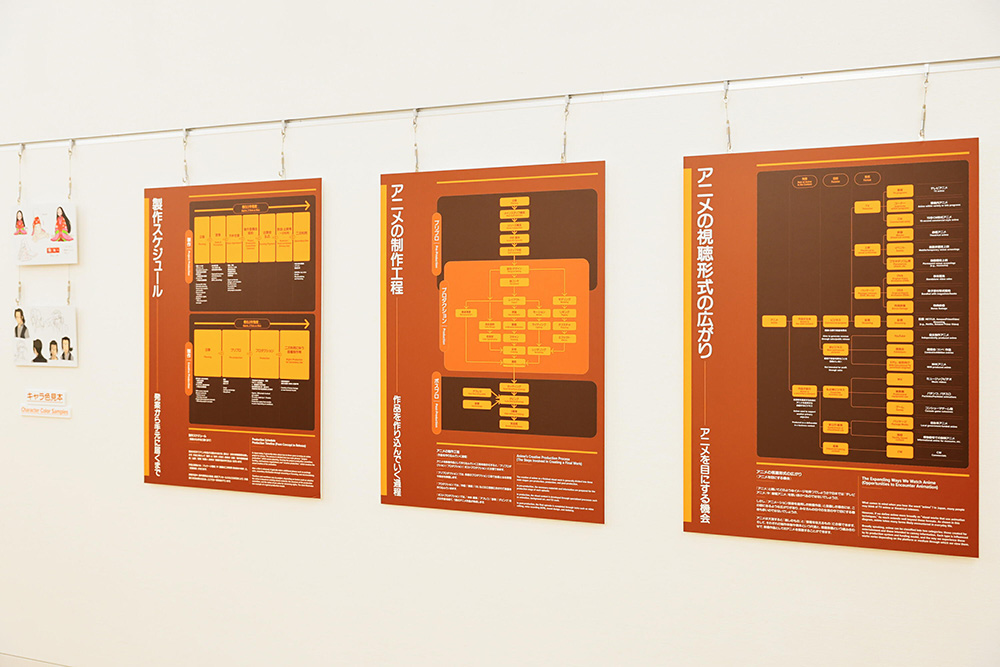
Also regarding cels, this section had an exhibit of information displays that summarized the work of animation researcher HARAGUCHI Masahiro, whose research was serialized in Monthly Animage in 1990. These boards outline the process of creating cel animation, along with the equipment and materials, such as the cels themselves, tracing machinery, and cel paints. English translations were included in the Tokyo exhibition so people from around the world could learn about the technical history of anime production.
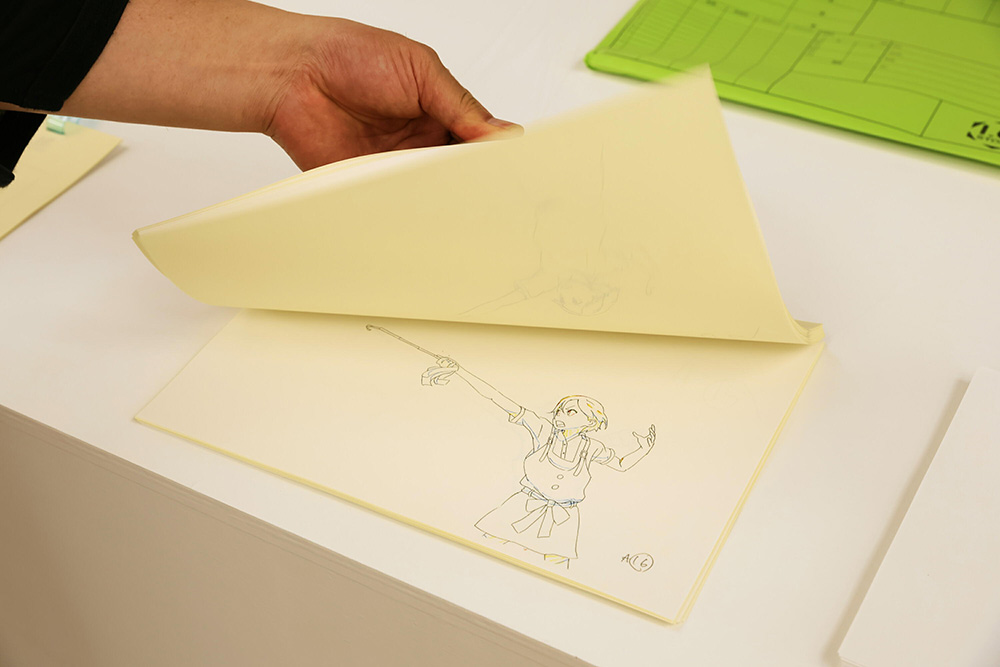
It is widely known that animation is achieved by layering several slightly different images, such as in a flipbook. This exhibition showcased a work entitled Li’l Spider Girl (2012) by Production I.G, Inc., which consists of bundles of reproduced key animation drawings and in-between drawings. By picking up the pages and flipping through them, the images appear to move.
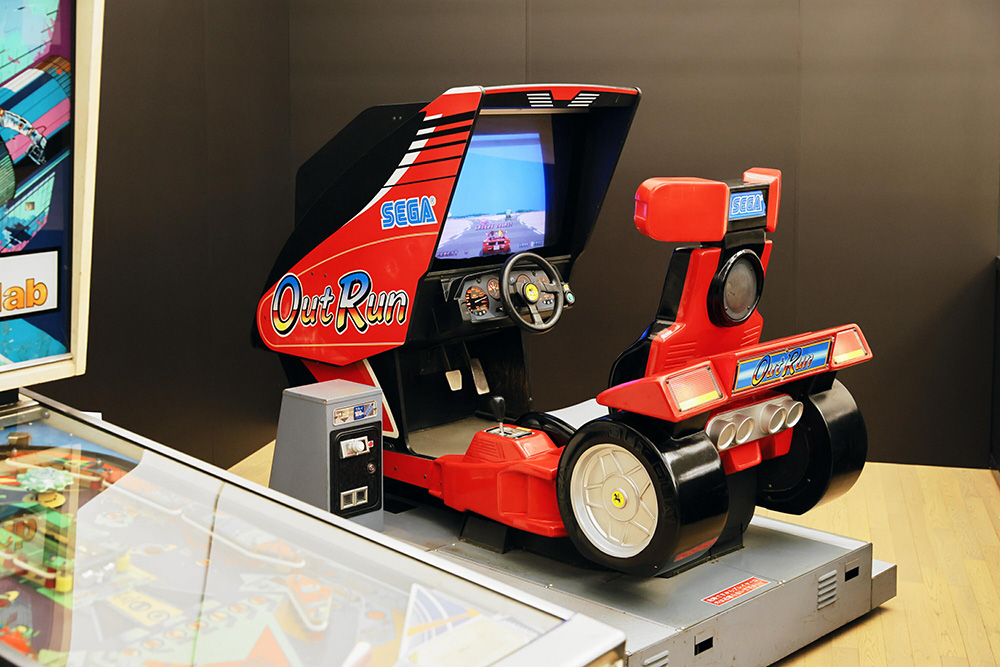
The video game section was a particularly fun place to visit, especially for those who used to play games at their local arcade. A special visible storage section was created for this exhibit, and a machine for SEGA CORPORATION’s racing game Out Run (1986) was displayed there. There was also a playable version of SEGA’s shooting game Space Harrier (1985) set up that was sure to bring back memories to those who played it back then.
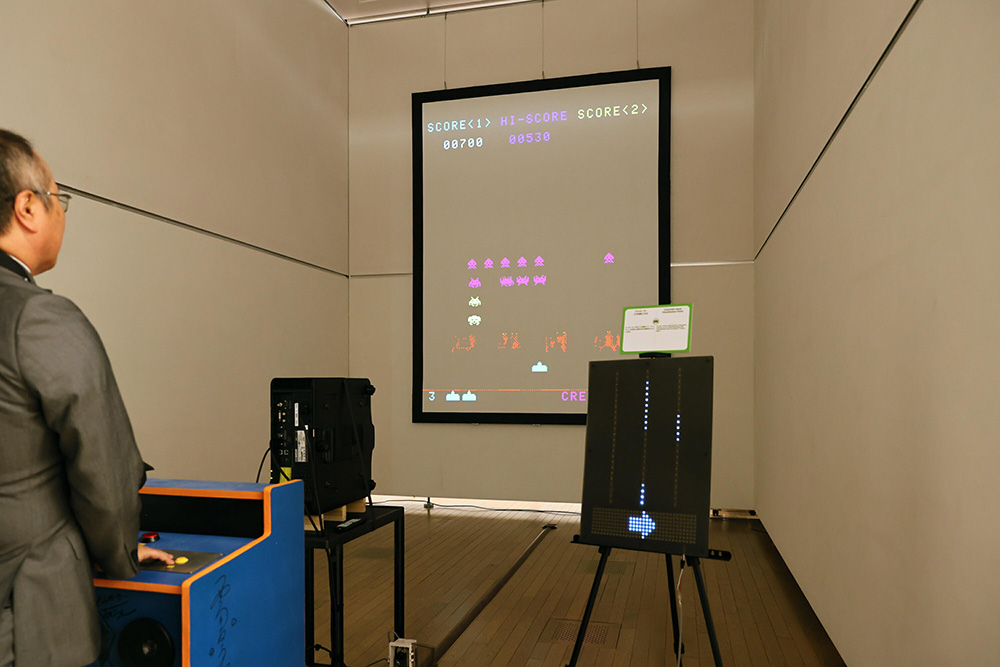
Not only that, but TAITO CORPORATION’s Space Invaders, credited with drastically increasing Japanese people’s interest in video games through the “Invader Boom,” could be played with the game projected onto a large screen. Off to the side was a monitor that tracked button operations to visualize how the game was being played.
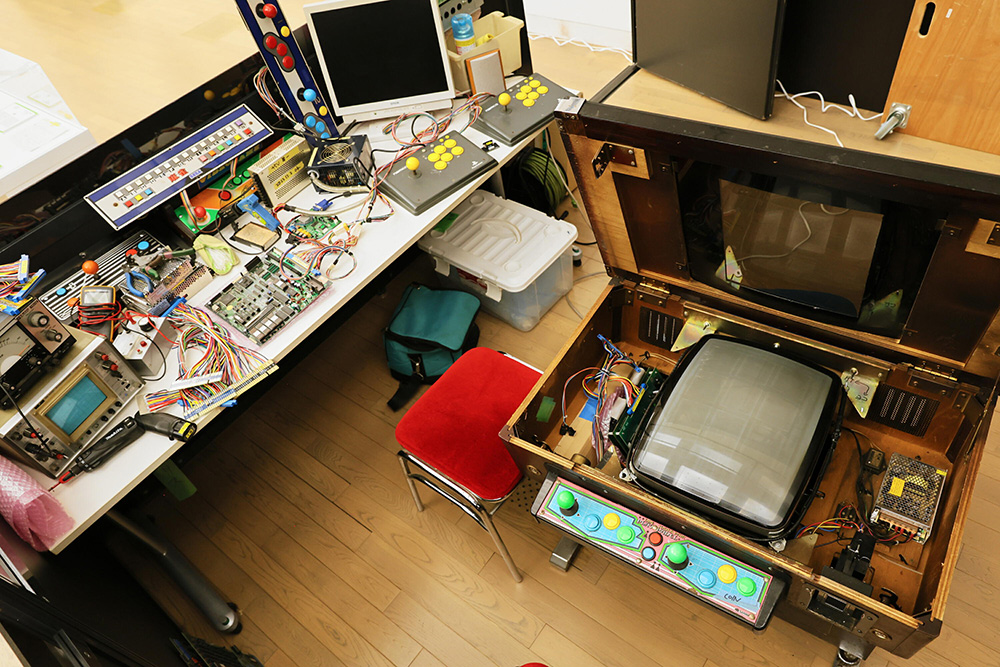
These arcade games, as well as home consoles and their games, are important parts of gaming history. But as time goes by, they eventually deteriorate, making supplies and parts scarce and making it difficult to keep them in the same condition as when they were installed in arcades. This exhibition recreated a workshop where game cabinets are restored with the help of the Japan Game Museum in Inuyama, Aichi Prefecture, which is working to keep arcade games in functioning condition. The exhibit shows visitors how a variety of arcade game parts, like circuit boards and relays, are repaired to keep units operational.
The plans and specifications that go into creating a video game are also a part of gaming culture and are important when talking about its value as an industry. This exhibition displayed plans and animation illustrations made during the development of Wonda purojekuto J kikai no shonen Pino (Wonder Project J: Mechanical Boy Pino) (1994). A magazine that solicited titles for the ENIX Corporation (now SQUARE ENIX CO., LTD.) game and more related items were also on display, giving visitors insight into the process of creating a video game.
Although commercial arcade machines were the focus of this section, the gaming industry also includes home and portable game consoles. Collecting and preserving the numerous types of hardware and the vast number of games that have been released to date is a huge challenge. In addition, games played on smartphones and through online PC platforms have become the norm, and the difficulty of preserving them as hard copies has been a topic of discussion.
In the world of manga, too, an increasing number of titles are being distributed digitally, and some works aren’t even published as physical books. And even in animation, more and more content is being released on streaming services, and storage methods like recording broadcasts or collecting physical copies are not as robust anymore. In the ongoing efforts to preserve manga, anime, and games, there is still much to take into account, including how to hold onto works from the past as well as the present and future.
Information
Preserving! Utilizing!! Manga, Anime, Games in Tokyo 2025
Period: June 14 (Saturday) – 22 (Sunday), 2025
Venue: Exhibition Room 2B, The National Art Center, Tokyo
Admission: Free
Organizer: Agency for Cultural Affairs
https://nokoika.macc.bunka.go.jp/en/
*URL link was confirmed on November 11, 2026.