© Agency for Cultural Affairs.
FUWA Ryozo
Photo: ONO Hiroshi
Composer KAWAI Kenji, renowned for his extensive array of works spanning animated TV series, tokusatsu (special effects), and live-action international films, has earned high worldwide acclaim. In the second part of this interview, KAWAI delves into the evolution of the unique “KAWAI sound,” born from his exploration of diverse musical expressions, and shares stories about his experiences with his close friend and collaborator, director OSHII Mamoru.
Index of Serials
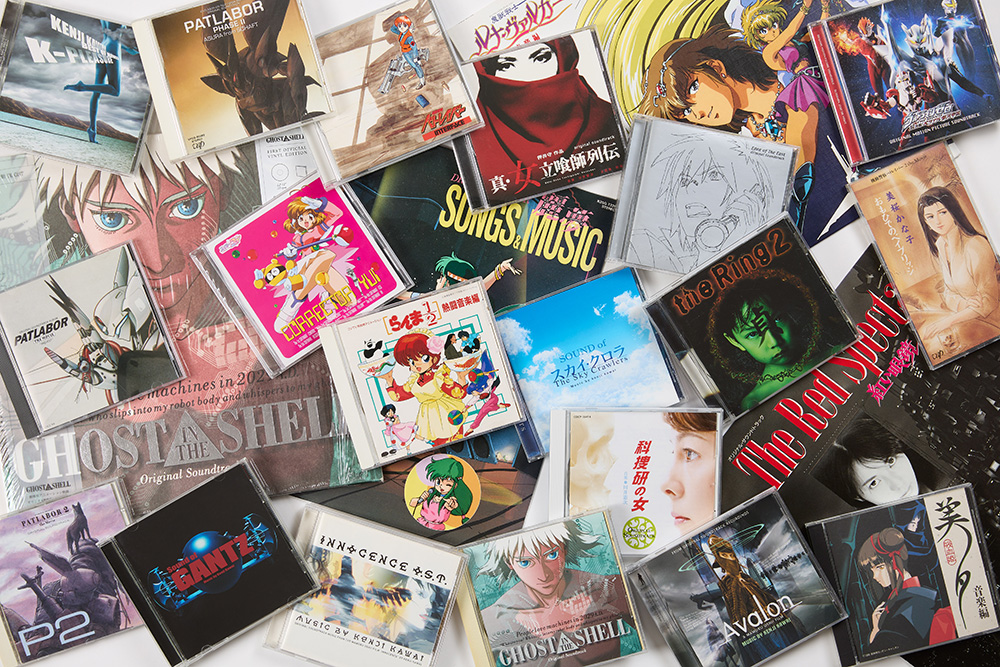
—You’ve worked on game music since the early stage of your career…
KAWAI Yes, I’ve done a few projects. The first one was for the game of the American tokusatsu hero series, Captain Power and the Soldiers of the Future (1987). However, it was not a video game as we think of them today. It was an interactive gadget that used a ray gun and a sensor that would react to the screen during broadcasts. I also worked on the music for the Nintendo Famicom (also known as the Nintendo Entertainment System) game Shin satomi hakkenden: Hikari to yami no tatakai (Shin Satomi Hakken-den: Battle of Light and Darkness) (1989). I think it was made by TOEI DOGA (now TOEI ANIMATION).
Another thing that people often mention even now is Sansara Naga (Nintendo Famicom, 1990) and Sansara Naga 2 (Super Nintendo, 1994). It was a unique experience, creating a game alongside the usual team: director OSHII Mamoru and screenwriter ITO Kazunori. For the first one, I composed the music with a game company, so it wasn’t entirely my work. Mr. OSHII himself is a huge fan of the Dragon Quest series. Dragon Quest III (1988) and Dragon Quest IV (1990) (also known as Dragon Warrior III and IV, respectively) were being released around that time, so we were all playing them together, saying things like, “How far have you gotten?” “I’ve reached this part,” and “I won!” So, when the opportunity arose, I thought Mr. OSHII might seriously create a Dragon Quest-style RPG. Eventually, it turned into something entirely different and rather unusual (laughs).
Back in the days of the Famicom, we could only use three notes plus noise, and even the sound effects had to fit within those constraints. This meant that whenever a sound effect was triggered, a part of the music would be cut off. It was completely different from the work I usually did for incidental music or commercials. Although it was challenging, it was actually fascinating for us to find creative ways of working within those limitations. With the Super Nintendo, we had eight notes to work with, and it also supported FM Synthesis, which allowed us to create far more complex music.
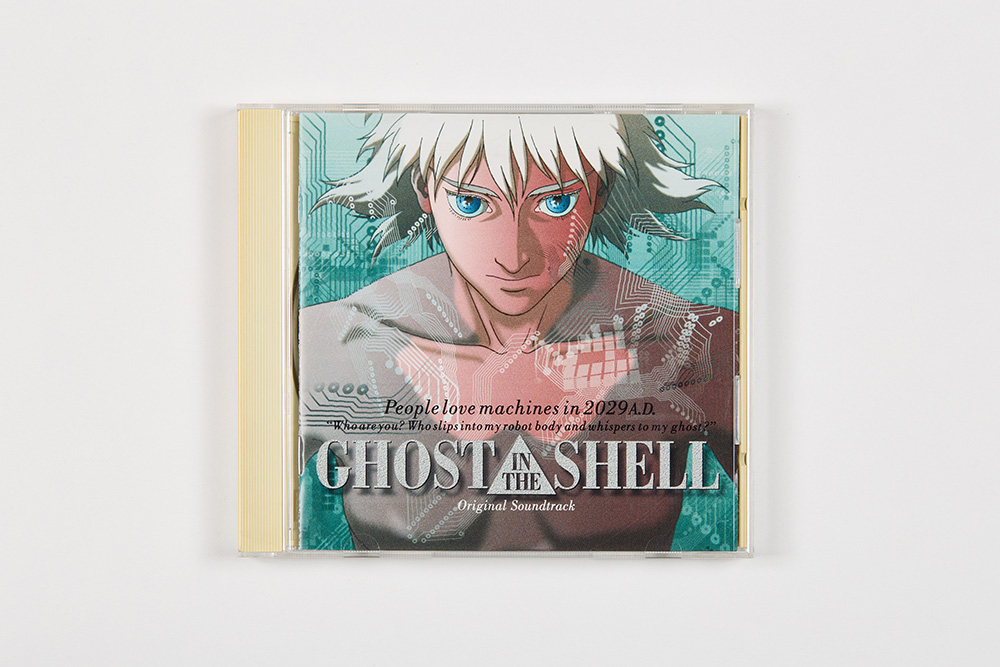
—In 1995, the movie GHOST IN THE SHELL premiered. Would you say this became a major turning point for both you and director OSHII?
KAWAI Yes, indeed. I believe this was the point at which the response from overseas grew significantly. Both Mr. OSHII and I struggled quite a bit while composing the music for GHOST IN THE SHELL. From the start, Mr. OSHII wanted to utilize primitive, “indigenous” rhythms, but with the visuals and storylines of the film, we also kept wondering, “Wouldn’t it make more sense for the music to be more cyber or perhaps even techno?”
The film was completed, previewed, and released in Japan, yet no one seemed to comment on the music. I didn’t know how it was received and whether people liked it. Mr. OSHII and I were still scratching our heads even after the release, thinking, “So…how did it actually turn out?” Then, sometime later, GHOST IN THE SHELL premiered in France. Every French person I encountered told me, “The music was amazing! It was the best!” I couldn’t help but respond with an unconvinced “What, really?” I returned to Japan and shared this with Mr. OSHII, and his first reaction was also, “What, really?” (laughs).
The “chanting” music done with NISHIDA Kazumi, which became GHOST IN THE SHELL’s signature sound, was created amidst uncertainty. Mr. OSHII had imagined “primitive rhythms” from the beginning, so we started by assembling a variety of drums from across Asia. I experimented with them for a while… but I felt that the drums alone were not enough to carry a film soundtrack. Around that time, the Bulgarian Voices were popular and I thought that a similar kind of simple chorus might blend well with the sounds of the drums. I tested it, and it seemed to work! We quickly sent a request to record with the group in Bulgaria, but they declined, saying, “We are a traditional folk song group, and we cannot sing newly written songs.”
—Oh! So that “chant” that defined the sound of GHOST IN THE SHELL ended up being quite difficult to create?
KAWAI Around that time, I was also working on the animated TV series Jusenshi garukiba (Wild Knights Gulkeeva) (1995), where I created a folk song-inspired song called Garukiba Ondo (The Gulkeeva March). We brought in NISHIDA Kazumi and other folk singers for the recording. I heard their voices, and it hit me: “This would be perfect!” We called them to our studio on very short notice and recorded the demo that would later become the foundation for the chant in GHOST IN THE SHELL. It was so brilliant that I immediately had Mr. OSHII listen to it. He decided right away, “This is amazing! Since we’re doing this, let’s use Japanese, and moreover, let’s make it in ancient Yamato language!”
Everything went smoothly up to that point, but then, no one wanted to write the lyrics in the Yamato language. I thought for sure that Mr. OSHII or Mr. ITO would come up with something, but in the end, I had no choice but to write it myself. I went to the library to research the Kojiki and Manyoshu, and thanks to that, I ended up debuting as a lyricist (laughs). It was also the first time NISHIDA and her team recorded something other than established folk songs. In Japanese folk music, there is no concept of “harmonizing,” so we started by recording and layering one voice at a time. That distinctive “ahhhhhh” sound with its delicate vibrato is called furi (swinging), a traditional style of chanting in traditional Japanese folk songs. NISHIDA and her team asked, “Do you want to insert furi? From where to where?” They were so skilled that they could control that kind of voice effortlessly. As expected from true professionals.
I was incredibly anxious because, at the time, music like this kind of “chant” didn’t exist. There had been similar attempts, such as the music produced by Geinoh Yamashirogumi for the movie AKIRA (1988), but those didn’t feature specific traditional music or instruments like we did. We didn’t have a solid foundation to rely on. And honestly, I didn’t know anything about traditional Japanese folk music before this project, so my lack of knowledge was a serious challenge.
—And now it has become a sound recognized all over the world as representative of the KAWAI style.
KAWAI Yes, I certainly received a few requests for “that folk song-like sound” since then. Naturally, there was a request for the sequel, Innocence (2004), but also some unexpected ones like a commercial for Domohorn Wrinkle (Saishunkan Pharmaceutical). The music for the BBC’s official trailer for the 32nd Olympic Games (Tokyo, 2020) was also created with that image in mind. This was a direct commission from the BBC, with no Japanese agencies involved. So, I guess when people in the UK or France think of “Kenji KAWAI’s sound,” that “chanting” sound might come to mind. I am deeply grateful. If I’ve been able to create even one piece that resonates like that, I consider it a great fortune and happiness.
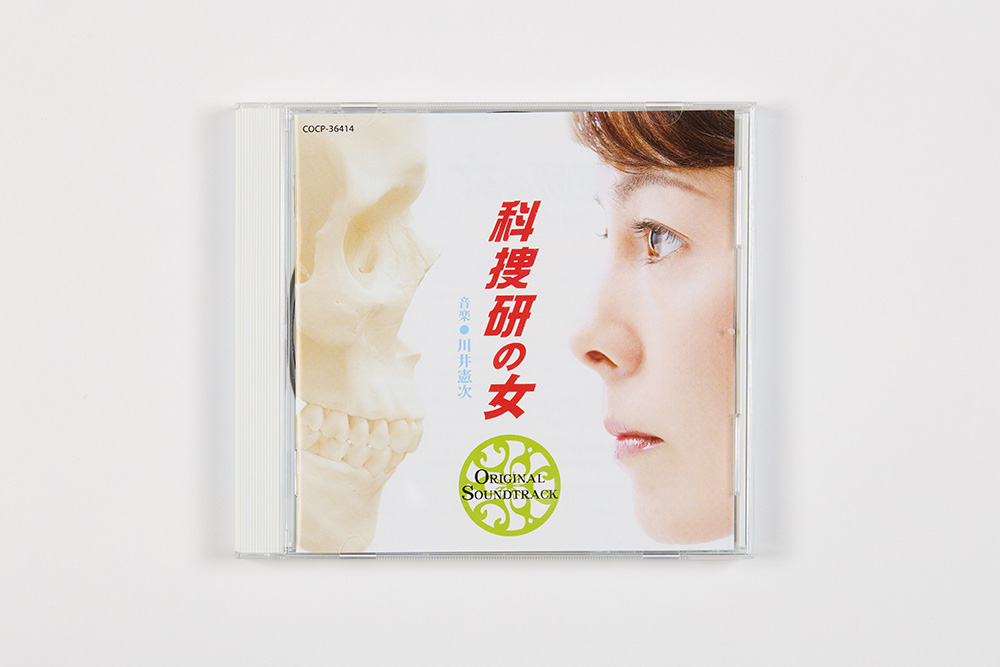
—Alongside the Kido-keisatsu patoreiba (Patlabor) series, which can be considered a life-long work of yours, there is also the TV drama Kasoken no onna (The Woman of S.R.I.) (1999–).
KAWAI I’ve been involved since Season 3 (2001), so it’s already been 23 years. For The Woman of S.R.I., I receive an overview of the kind of music they’d like each season and compose about 10 tracks each time. Beyond that, the tracks I created for previous seasons are reused as well. So, it’s not as if the music suddenly shifts completely from one season to the next. Instead, the music style evolves gradually over the course of many seasons.
The Woman of S.R.I.: The Movie was also produced in 2021, and at that time, I managed to create music with a much richer arrangement compared to the TV version. On the flip side, it has become harder to surpass the intensity of the movie version’s music. For dramas like The Woman of S.R.I., where worldbuilding is firmly defined, it is quite challenging to suddenly alternate the melodies to jazz or rock, for example. The “strike zone” is narrow. Yet, I still need to produce a fresh impression for each new season within this limited zone… This remains one of my biggest challenges.
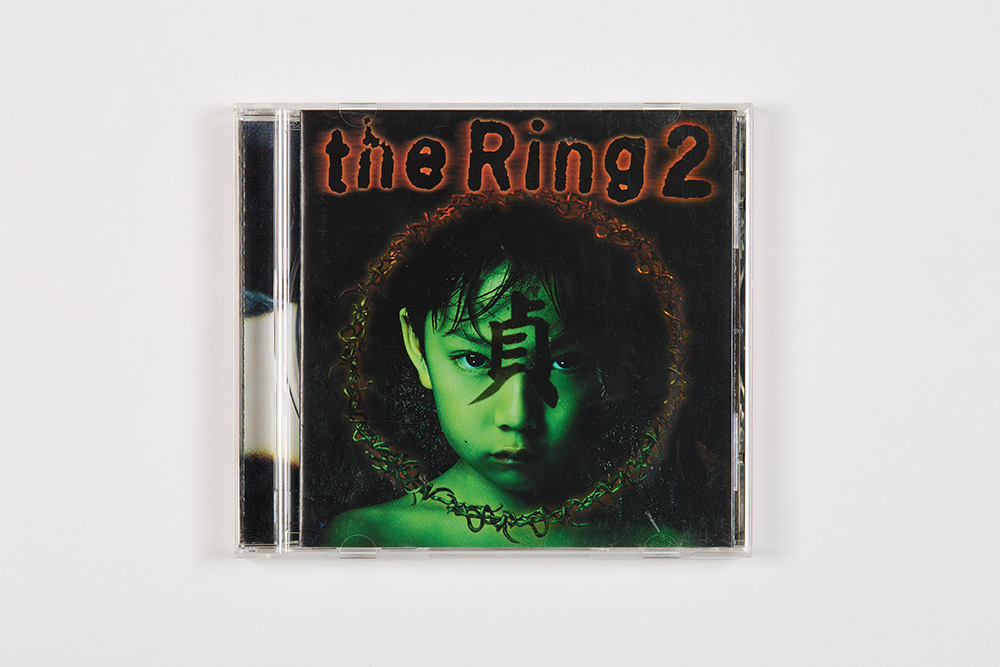
—Another one of your signature genres is undoubtedly horror movies. Your sound has accompanied the rise of domestic horror movies, so-called “J-horror,” since the 1990s.
KAWAI The first one that I worked for was Ringu (Ring) (1998). I have had a long-standing relationship with Mr. ICHISE Takashige, the producer of Ring, since Seirei no sasayaki (Spirit Whispers) (1987). At first, I was asked to do the music for Rasen (Spiral), which was screened simultaneously with Ring… but as you can imagine, working on both at the same time was impossible, so I focused on Ring. Its sequel, Ringu 2 (Ring 2) (1999), was also a big success, and Sadako’s character became a cultural phenomenon, far beyond anything we could’ve ever imagined.
For horror film music, I believe that if you recognize it as “music,” it introduces a sense of objectivity. It disrupts the audience’s immersion into the film’s world. Those who watch horror films are looking for a “real and frightening experience,” akin to entering a haunted house. They are not there to enjoy visuals or soundtracks. It shouldn’t feel detached, like watching footage of a desert in a cool room or war on TV. Instead of thinking, “Oh, there’s music playing,” the audience should wonder whether the strange sounds are music or sound effects… I think that creates a deeper sense of fear.
Of course, even if there are emotional scenes and parts where the music conveys sadness, I want the music to be absolutely terrifying. In Japanese horror, there’s this distinct sense of “dampness” that is different from the fear of being attacked. It’s like the unsettling feeling of a wet tatami mat. I want to capture that sort of fear. This does not mean I overly rely on Japanese-style melodies or instruments. On the contrary, for Ring and similar works, I don’t believe I used them even once.
—Is there a difference in the way you make music for live-action films and animated films?
KAWAI These days, not anymore. In the past, there were slight differences, but now I don’t think there’s any. The one key difference is that for live-action films, the visuals are often already available during the music production phase. Since I am the kind of composer who creates music while watching the visuals, this is a huge advantage. But for animation, black-and-white line drawings, unmoving storyboard images, or only text instructions for timing are often provided… it’s still the same as before. There are still moments when I think, “Wait, which scene are we on right now?” (laughs).
—We discussed earlier how composers of incidental music work to interpret the director’s intentions. You’ve also worked extensively on film music for Hong Kong, China, and South Korea. Are there specific considerations you keep in mind when communicating with international directors and staff members?
KAWAI We usually work with interpreters, so I can generally understand what they want to convey. Yet, funnily enough, it still ultimately depends on the director. As I briefly touched on this topic earlier, there are directors where it’s crystal clear what they are looking and aiming for, and others where you cannot tell at all (laughs). This applies equally to Japanese and international directors, regardless of whether an interpreter is involved. It seems nationality has nothing to do with it.
—In the four-part epic Hong Kong Ip Man (2008–2019) film series, for example, the martial arts action scenes are meticulously synchronized with your music…
KAWAI For films like the Ip Man series, the action scenes are a centerpiece, so we perfectly tailor every sound to fit every frame. However, for Ip Man, there is something that made it easier compared to other action films. That’s because, in Chinese martial arts, there is always a “stance” before any movement, where they momentarily freeze, right? Even if there’s no sound during these stances, it still works well. The flow of stillness and movement—action and pause—creates a rhythm… It makes it easier to compose the music and to plan how one piece transitions to the next. It’s also easier to provide the right time to introduce the music.
On the other hand, the action films where the whole 20-minute climax is a battle scene—those are truly difficult. Although I wasn’t originally a viewer of Hollywood movies, I found their style of arranging music to be quite challenging. Also, the most challenging scenarios are when several people are fighting in different battle scenes at the same time. Should I use a different melody for each character or scene? If I do that, won’t the music feel disjointed? What should I do…? These are the questions I’ve been asking myself. Recently, this has been one of my biggest challenges (laughs).
Because I often work on robot and action films, I get easily misunderstood, but I actually prefer composing peaceful music. Sometimes I wonder, “Why do I keep fighting all the time?” (laughs). I have come to realize that my musical style is not determined by myself but by the projects I’m offered. As I mentioned before, my ideal music is Burt BACHARACH, and I would really love to write songs like his.
—Then, what are some works you’ve done that align with the kind of music you’ve always wanted to create and would like people to listen to?
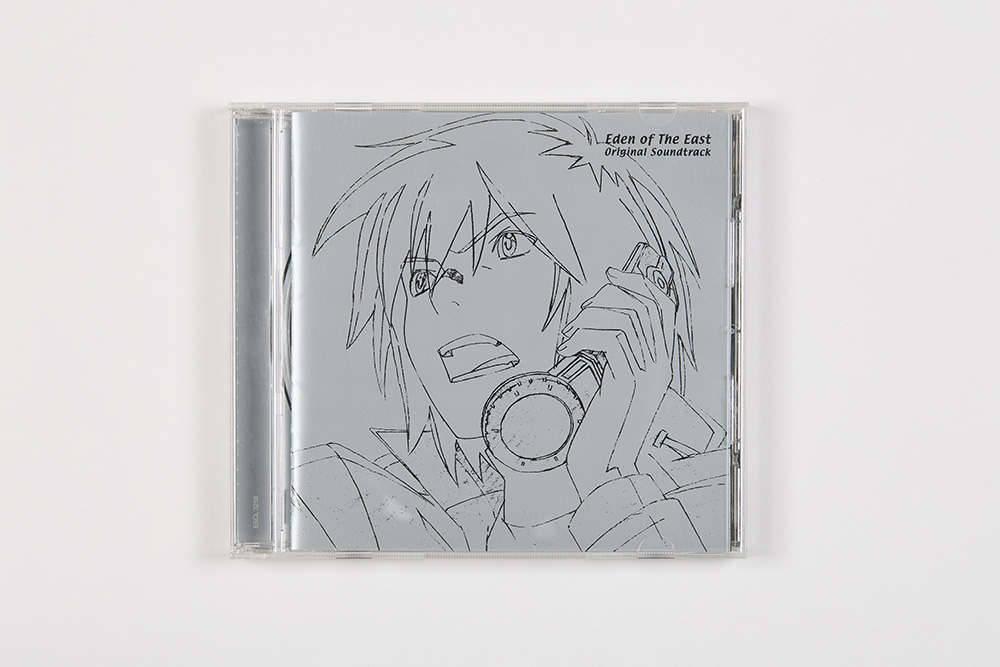
KAWAI Windy Tales (2004) and Eden of the East (2009) come quite close. I would also like to highlight the music I composed for the NHK’s morning dramas Umechan Sensei (2012) and Mampuku (2018).
—If you were to name a predecessor as a goal, it would, of course, be…
KAWAI Burt BACHARACH. He is my only choice. There is a musical film called Lost Horizon (1973) for which BACHARACH composed the music. The movie itself wasn’t that successful and isn’t very well-known in Japan, but every part of this soundtrack is fantastic. I still love listening to it even now. At first, BACHARACH’s music may seem like the “mainstream” of popular music, but in reality, it’s much deeper and more complex. In contrast to the lyrics expressing love and kindness, the music itself is very edgy. It feels as if there is a hidden darkness within it. Ever since I was a child, and even now, I’ve listened to it, constantly thinking, “This is amazing. Truly amazing.” That’s the kind of composer I aspire to be.
—Your primary field of work is incidental music for visual media. Do you compose by weaving music from your imagination without relying too much on concrete information, or do you prefer using specific visuals as inspiration?
KAWAI As we talked about it earlier, it’s definitely the latter. I’m not the type to have some pre-existing motifs or stockpile of ideas that I pull from for each project. I watch the footage, get an impression, and then compose the music from scratch. I don’t have even a single stock music (laughs). For pre-recording projects with no available footage yet, like TV animation, I follow the music script provided by the sound director and compose the music based on their instructions. Since versatility is especially important for television, I make sure not to introduce unexpected musical flavors or key changes on my own. Sometimes the sound director will make edits, so it’s also crucial to ensure the music is easy to edit.
Since switching to Pro Tools, I’ve been increasingly delivering music in “stems.” Put simply, I deliver the multitrack as is, allowing individual elements, such as just the piano or just the strings, to be extracted. This approach has become standard recently. For instance, if there are dialogues in the scene, the melody’s volume can be lowered slightly. Of course, I still create the usual 2-channel mix, which is typically what gets used. The only reason that this workflow is feasible is because Pro Tools has become a standardized and shared technology in the industry.
—Earlier, you recalled some of the early works of your career from the 1980s that left an impression on you. Are there any more recent pieces that are memorable or that you feel especially confident about?
KAWAI I don’t have any works I would call “confidence pieces” (laughs). I’m always filled with anxiety about my music. After finishing a piece, I always wonder, “How is this? Is it okay?” I never feel like, “Hey everyone, listen to my music!” It’s more like, “Um, if you’d like, maybe try listening to this…” (laughs). Despite this mindset, I’ve been fortunate to keep working all this time, and for that, I’m incredibly grateful.
—Lastly, what words of encouragement would you offer to younger generations pursuing the media arts field, particularly the world of music and sound?
KAWAI I’m often asked to say a few words to the younger generation, but the only thing I can really say is, “Believe in yourself.” Like I did, you have to trust your instincts. Of course, there will also be times when it doesn’t work. Another thing, as we discussed earlier, is that all the work you do stems from once-in-a-lifetime encounters and the connections you build with people. If I had not met this person, I wouldn’t have connected with this person… It’s all a result of these relationships being built upon each other. That doesn’t mean you should force yourself to go out for drinks, meet people, or desperately seek out these once-in-a-lifetime encounters. It’s more about staying committed to your work and not cutting corners with each project. If you produce something meaningful, the next opportunity will come. That said, I don’t even know if I’ve truly achieved anything myself (laughs).
—Thank you very much for sharing such valuable insights with us today.
KAWAI Kenji
Composer and arranger. Born in Tokyo. Major works includeKido-keisatsu Patoreiba (The Mobile Police Patlabor) (1988, 1989), GHOST IN THE SHELL (1995), Ringu (Ring) (1998), Kasoken no onna (The Woman of S.R.I.) (2001–), Seven Swords (2005), Kidosenshi Gandamu 00 (Mobile Suit Gundam 00) (2007–2008), Ip Man (2008–2019), NHK Special Futto toshi (Boiling City) (2008–2009), BS World Documentary Yomigaeru dainiji sekai taisen: kara-ka sareta shirokuro firumu (Reviving World War II: Black and White Film in Color) (French documentary, 2009), NHK Special Mikaiketsu jiken (Unsolved Crimes) (2011–2020), Hanamoyu (Ardent Flower) (2015), Urutoraman Jido (Ultraman Geed) (2017), Kamen raida Birudo (Kamen Rider Build) (2017), NHK Special Jintai shimpi no kyodai nettowaku (The Body: Miracles of our Inner Social Networks) (2017), Mampuku (2018), Kitaro tanjo gegege no nazo (The Birth of Kitaro: The Mystery of GeGeGe) (2023), and more.
http://www.kenjikawai.com/ (in Japanese)
*Interview date: September 25, 2024
*URL link was confirmed on December 10, 2024.