© Agency for Cultural Affairs.
TAKEMI Yoichiro
The first large-scale solo exhibition in Japan by Yves NETZHAMMER, a leading Swiss video installation artist, was held at the Utsunomiya Museum of Art in Tochigi from March 10 to May 12, 2024. This article reports on the exhibition Blätter sind Fragen der Luft (Leaves are Questions of the Air) through photographs.
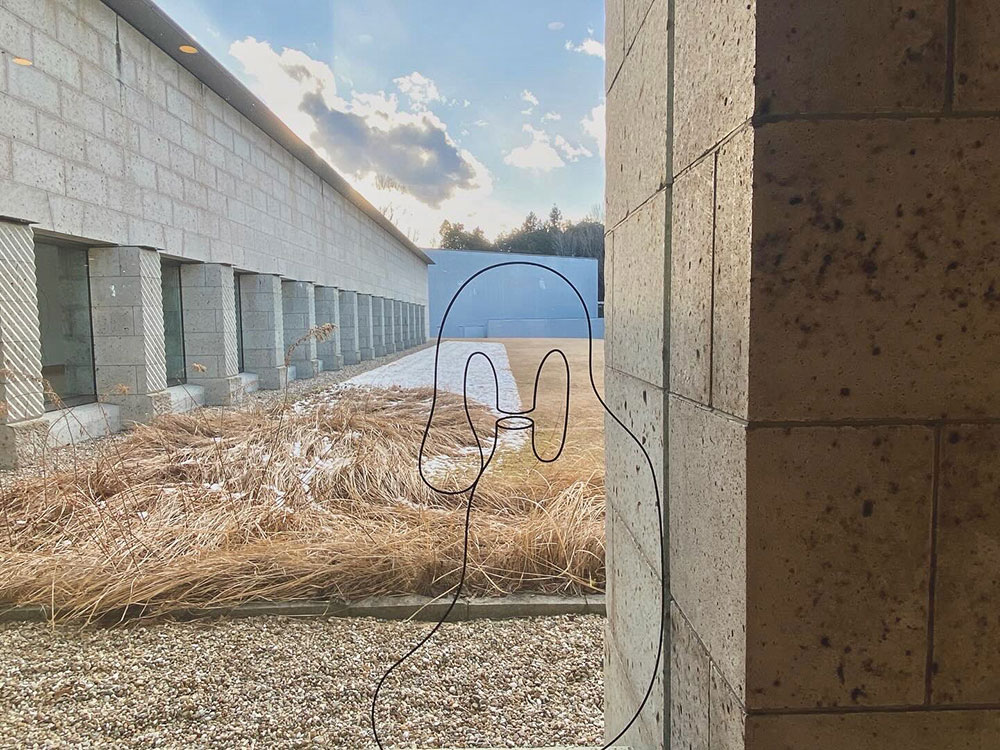
Yves NETZHAMMER has been in the international spotlight since he represented the Swiss Pavilion at the Venice Biennale in 2007 at 37. Following exhibitions at SFMOMA in San Francisco in 2008 and at Kunstmuseum Bern (2010–2011), a large-scale solo exhibition is being held at the Utsunomiya Museum of Art.
One of the defining elements of NETZHAMMER’s work is the line drawings. Elegant digitally drawn lines combine to form humans and animals, not only exist as impressive graphics but cross over to the three-dimensional space of reality. In this exhibition, decals of drawings are presented on the glass corridor leading to the exhibition rooms, superimposed upon the view of the forest surrounding the museum to provide an impressive introduction to the show.
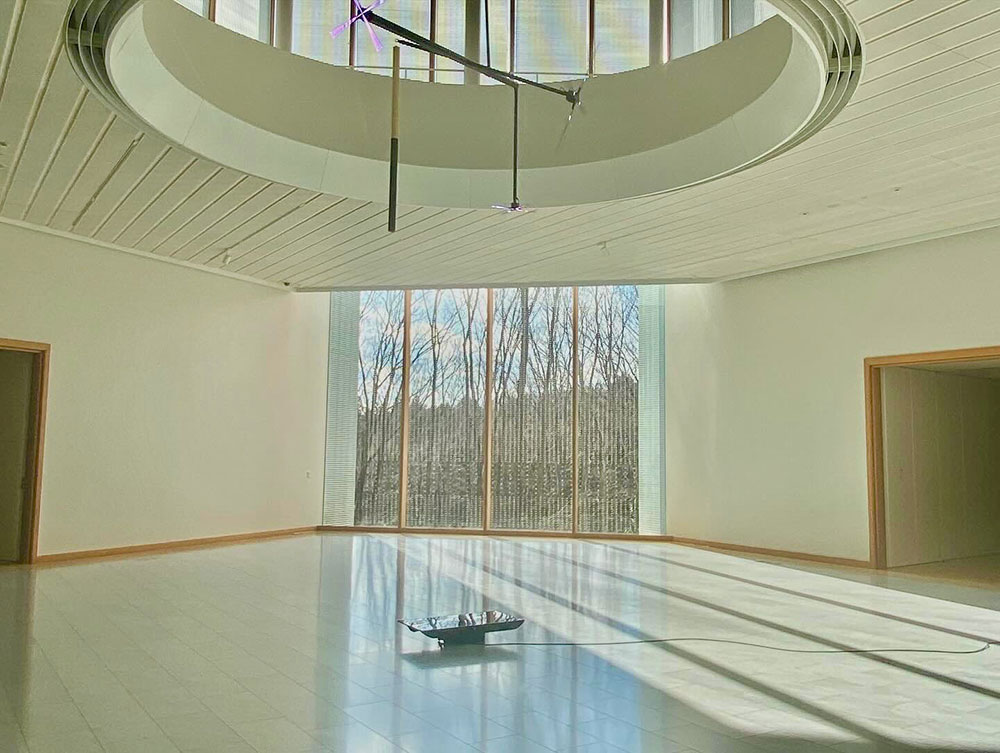
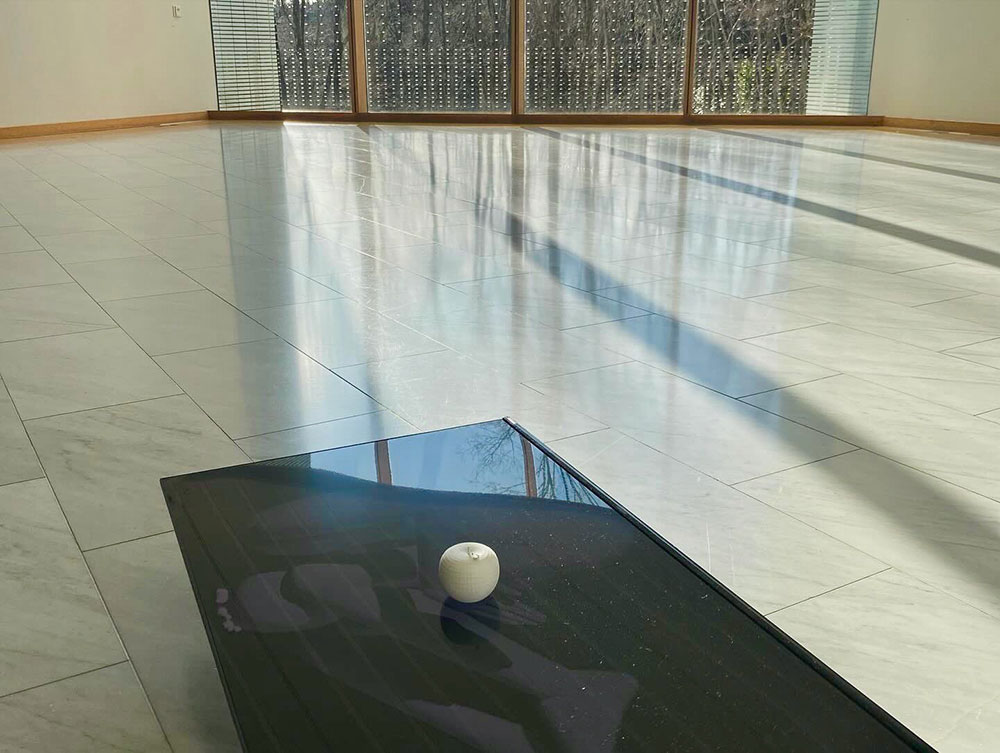
NETZHAMMER deeply cares about experiments based on the geography, climate, and history of the venue location. The large-scale installation that plays a vital role in the exhibition is also an original work built on his research in Utsunomiya.
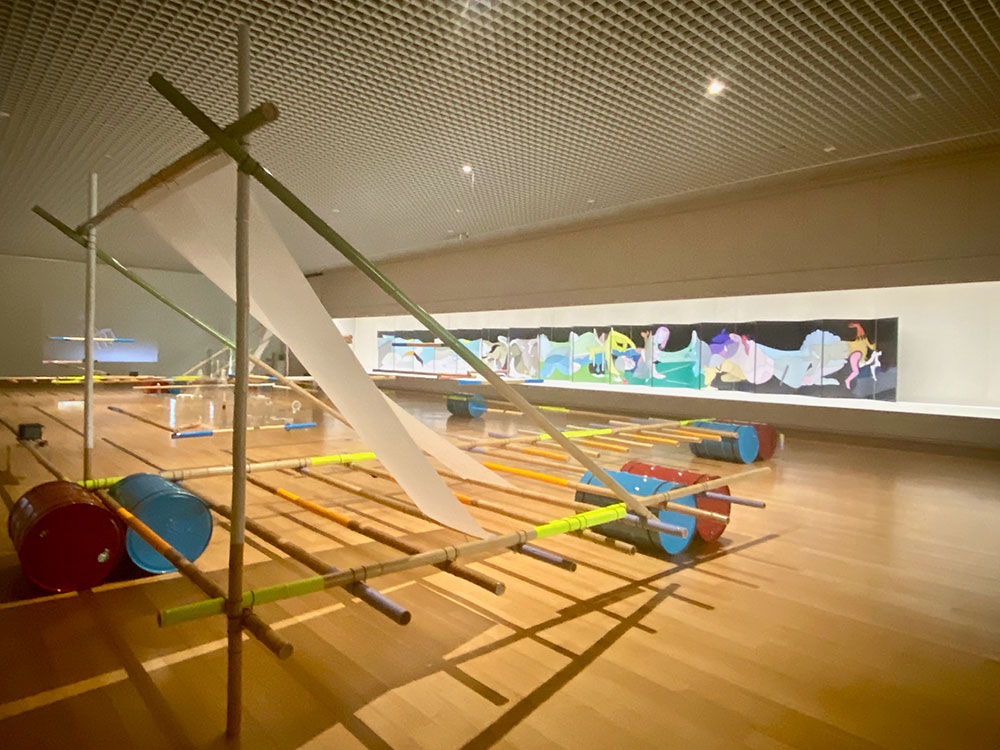
When NETZHAMMER visited Utsunomiya about five years ago, he visited the remains of a vast quarry that served as an Oya stone mining site for seven decades, from the Taisho to Showa era. Inspired by what he saw in the underground cavern, a space reminiscent of a temple, he created on-site a large-scale installation, Floss (Raft). A 30-meter-deep framework is made of bamboo (which is a hollow material too). As viewers walk through the maze-like bamboo installation, they encounter white objects printed on a 3D printer.
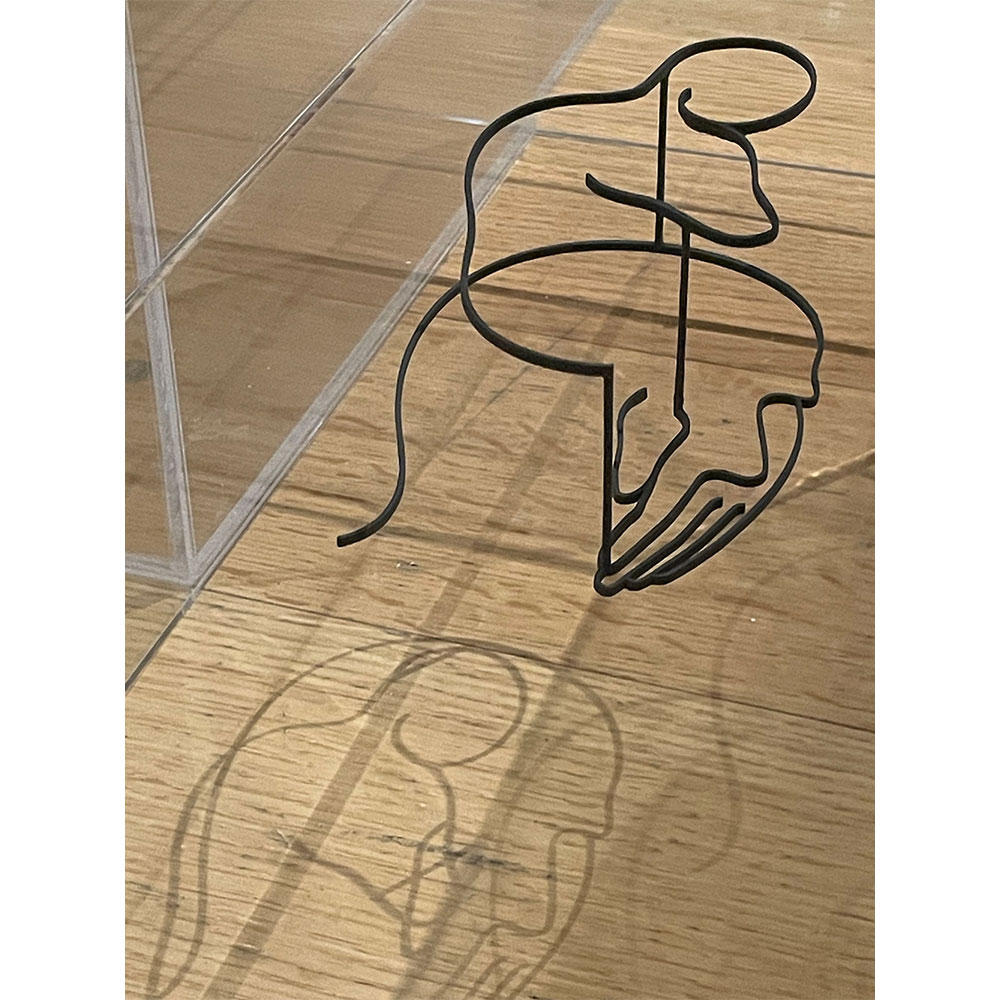
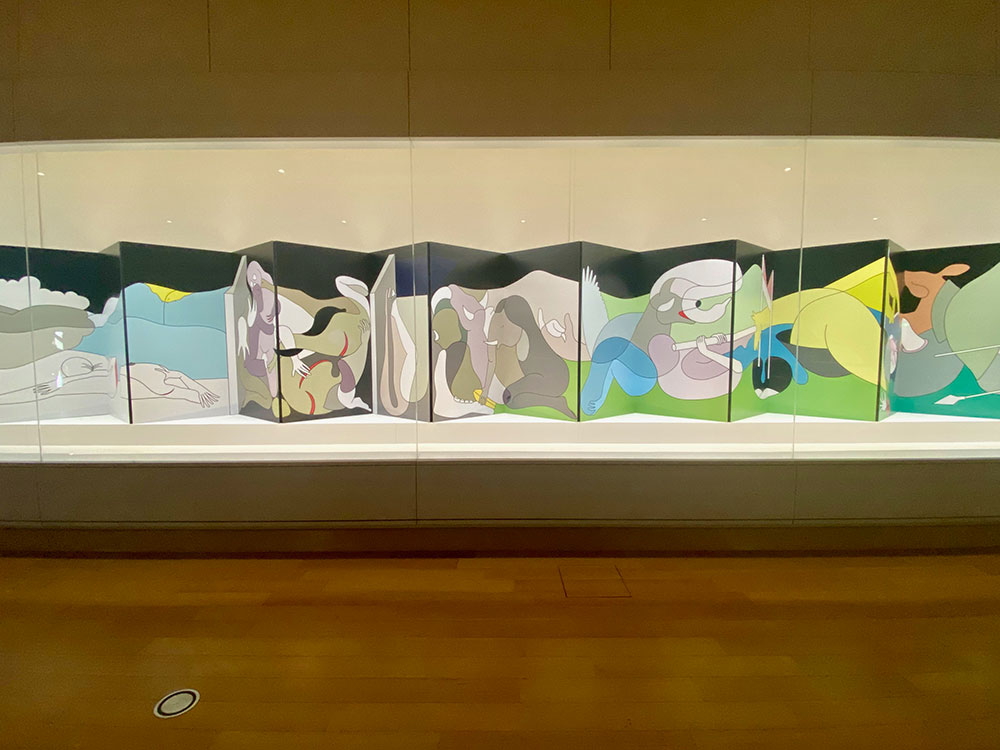
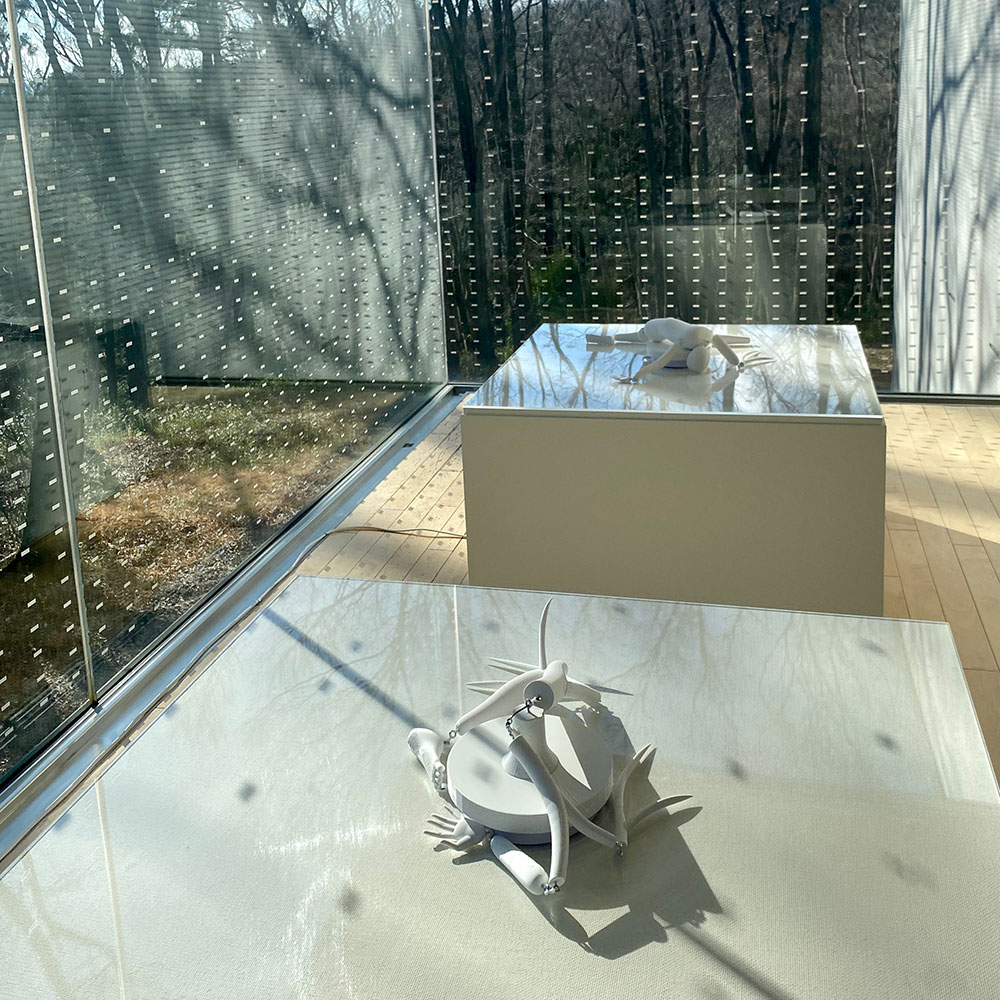
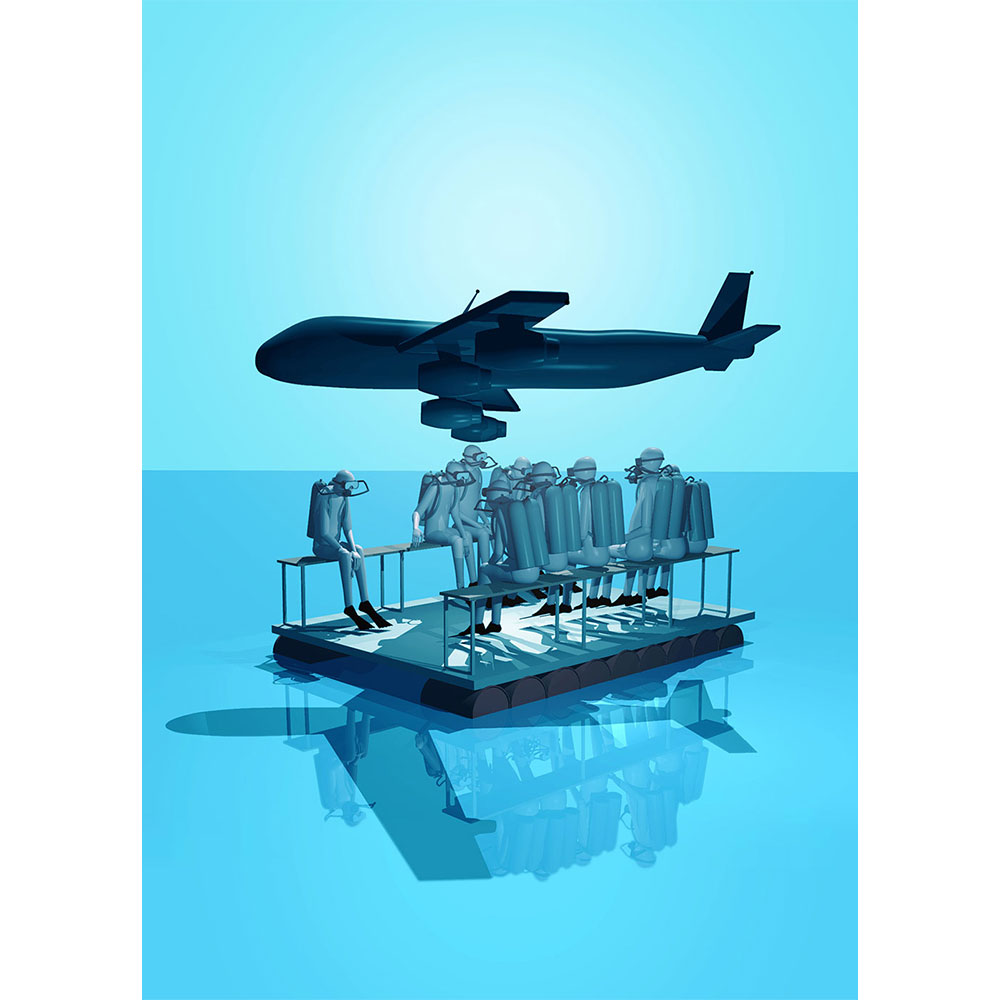
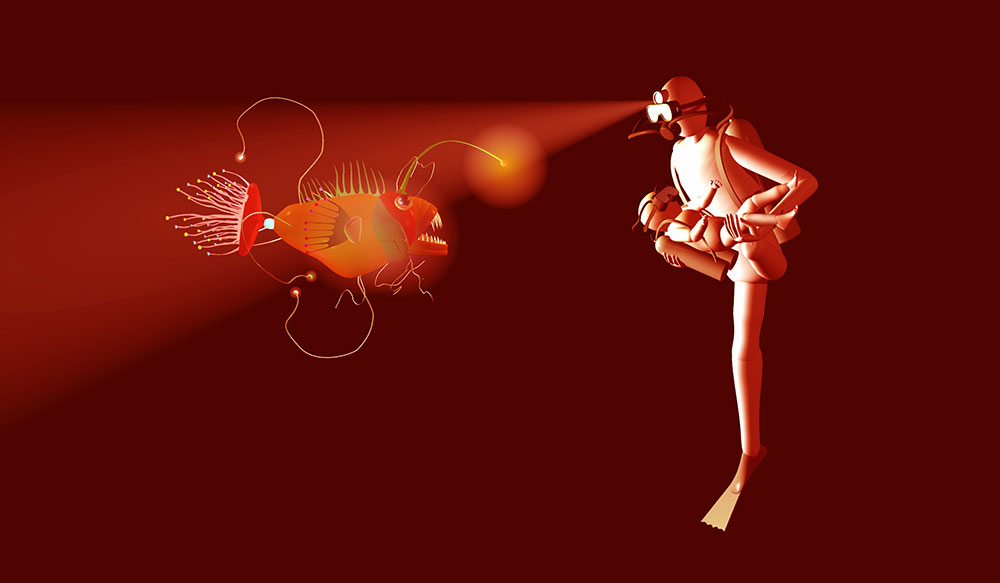
What defines NETZHAMMER’s distinctive style, apart from his drawings, is his human-shaped characters. They appear repeatedly in his digital animations, including the four works featured in this exhibition.
They have limbs and torso but no faces, while some body parts (such as tongues) only occasionally take shape as a result of interacting with external factors. The design reminds us of the wooden puppets artists have used to model human movement since ancient times. It also resembles a prototype of the human body model as a skeleton in 3D animation getting character as it is.
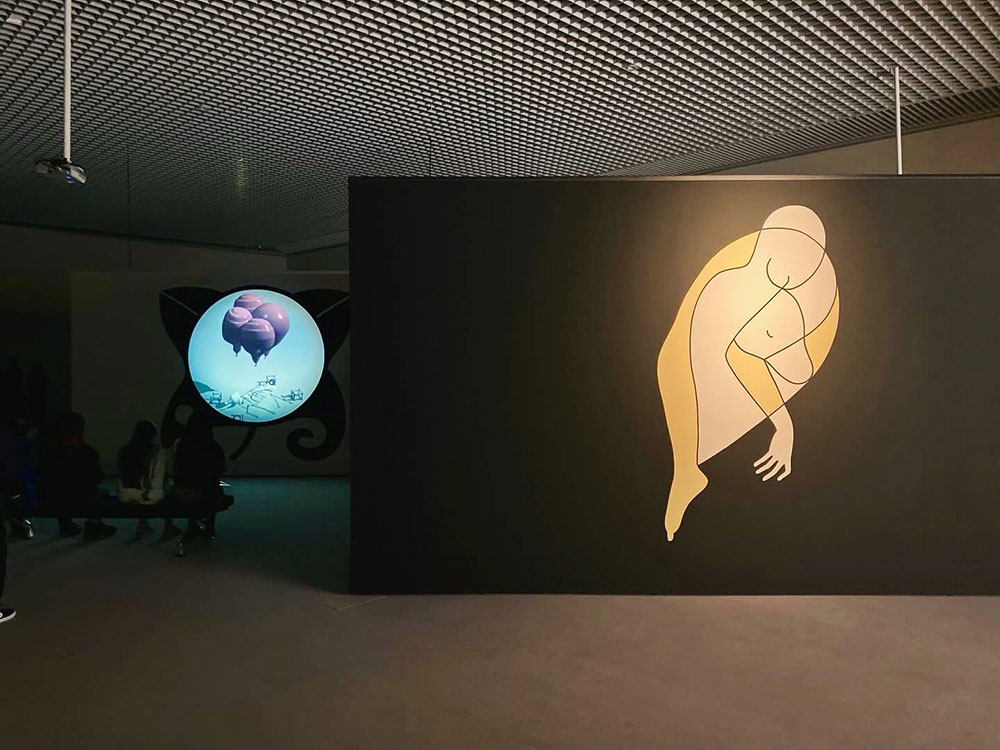
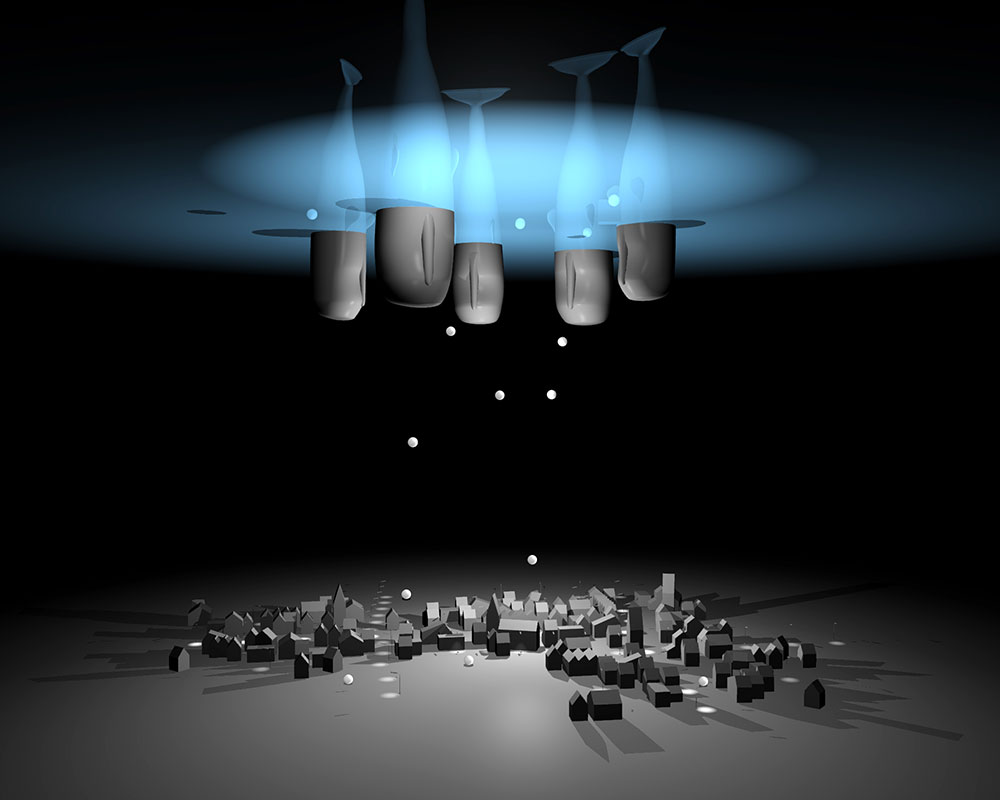
NETZHAMMER’s animation works depict a chain of imageries blurring the boundaries between animal, machine, and self. Deciphering a consistent narrative structure is not easy, but somehow I could not take my eyes off them. For example, The subjectivisation of repetition, project A from the Venice Biennale depicts the empathizing process of whale-like marine creatures and faceless puppets despite their wounds. The characters bleed and tremble in isolation in a room.
Seeing a digital entity bleed and face mortality, despite being able to be reproduced forever as long as the data exists just like the 3D printer in the aforementioned exhibition room, reminds us of “Astro Boy’s Proposition”1 offering sentimentality unique to NETZHAMMER’s works.
Although NETZHAMMER rarely explains himself, a highly pure message can be perceived from the images that appear one after another on screen.
Swiss journalist Philipp MEIER comments on the work as follows:2
The whole image cannot be comprehended. There are only fragments that slowly move here and come together to form a drama whose meaning and purpose we will never explore. The digital soundtrack that Netzhammer adds to his moving image reinforces the feeling of strangeness and discomfort, as if in a bad dream. In essence, this is very similar to the reality we experience every day. The world is unstable, in a constant state of flux of experiences and emotions. And always incomprehensible in its entirety.
The term “kototoi” (used as the translation for “Fragen/question” in Japanese) in this exhibition means “to ask and discuss.” We take home the questions posed by the silent puppets to keep searching for answers while ruminating on the many images shown in the exhibition.
notes
information
Yves NETZHAMMER Blätter sind Fragen der Luft
Date: Sunday, March 10–Sunday, May 12, 2024
Closed: Mondays (Open on April 29 and May 6), April 30, and May 7
Venue: Utsunomiya Museum of Art
Opening hours: 9:30–17:00 *Last admission is 30 minutes before closing.
Admission: Adults 1,000 yen, University and High School Students 800 yen, Junior High and Elementary School Students 600 yen
*URL link was confirmed on April 15, 2024.